Guide · Holiday season
Dry December: how to do a sober December, and still enjoy it
Doing a sober month in the busiest drinking month of the year sounds like the hard way round. Some people swear it's the best way: no hangovers through the party season, and a January that starts with energy instead of regret. Here's what Dry December means and how to make it work.

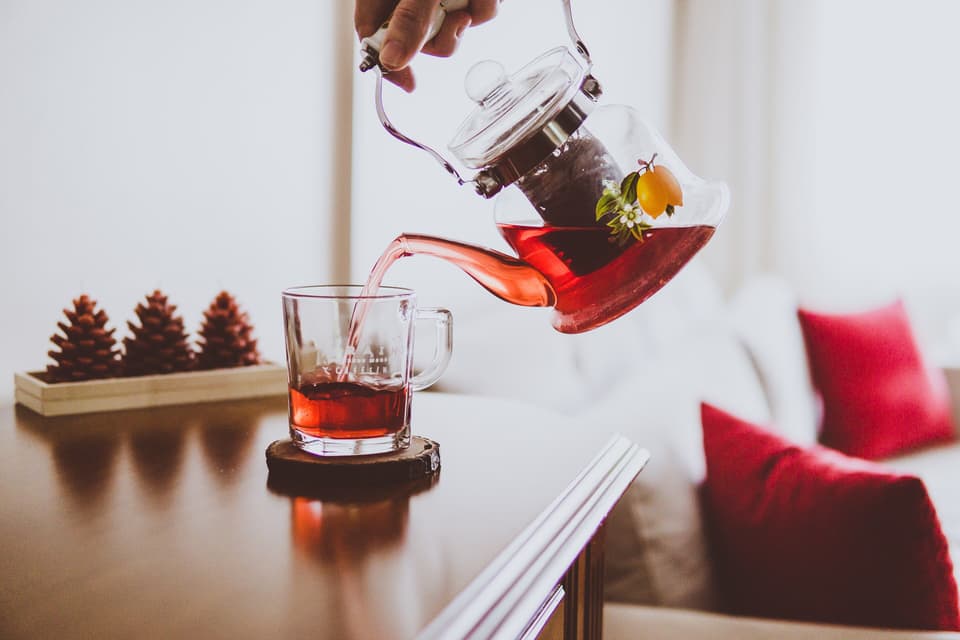
Photo is illustrative, not from a past month. Credits.
Quick answer. Dry December means drinking no alcohol from 1 to 31 December. Unlike Dry January, no single big charity campaign owns the name (as far as we found on 3 Nov 2026), so you set your own rules. It is harder socially than January, because of parties, but many people like arriving at the new year clear-headed. Plan each event, bring your own drinks, and decide in advance whether New Year's Eve counts. If you drink heavily or every day, talk to a doctor before you stop.
Most people take a break from alcohol after the party season. A smaller group does it during. They tend to describe the same thing: December without hangovers feels twice as long, in a good way. More mornings, more memories, more money for presents.
Please read this first. If you drink heavily or every day, or use other drugs daily, stopping suddenly can be dangerous. Talk to a doctor before you stop. The Quiet Month is not medical, not therapy and not rehab. In a crisis, call your local emergency number or find a free helpline at findahelpline.com. More in our questions.
What Dry December means
Dry December (also "sober December") simply means no alcohol from 1 to 31 December. Unlike Dry January, which is a registered campaign of the UK charity Alcohol Change UK, we couldn't find one organiser that owns the Dry December name. Some charities run December fundraisers; most people just do it on their own. That's freeing: you set the rules.
Why do it in December?
- Start the new year well. No fragile 1 January.
- Enjoy the season more. You remember the parties and the presents, and you're up early on the days off.
- Save money in the most expensive month. Our calculator works for any 31 days.
- Test the hardest month. If you can do December, you know a lot about your relationship with drinking.
The World Health Organization's European office says no level of alcohol is completely without risk, and the UK guideline is no more than 14 units a week, spread over three or more days. December is when many people go well over that.
Decide your rules on 30 November
- Does New Year's Eve count? It's 31 December. Decide now, not at 11.58 pm. Our sober New Year's Eve guide has 30 ideas for the night.
- Alcohol-free beer and wine? Most people allow 0.0% drinks. In the UK, "alcohol-free" means 0.05% or less.
- Christmas pudding and cooking wine? Most people don't worry about food.
- One exception or none? A planned exception is different from a slip, but "none" is usually easier to keep.
A week-by-week plan
Week 1 (1 to 7 December): set up
- Look at your calendar. Mark every party, dinner and work do.
- Stock the fridge with drinks you like: see alcohol-free Christmas drinks.
- Tell one or two people. "I'm doing a dry December" is a full sentence.
Week 2 (8 to 14 December): the first parties
- Arrive with your drink decided, get a glass in your hand in the first minute, leave while it's fun.
- Have one line ready. 50 ideas: how to say no to a drink.
Week 3 (15 to 21 December): peak party week
- The office party usually lands here. Read the Christmas party without drinking.
- Say no to one event that would be miserable sober. That's allowed.
- Hosting? See alcohol-free party ideas.
Rowan is our AI assistant. Please keep health details for the video call.
Week 4 (22 to 28 December): family and the days in between
- Christmas Day is long. Plan its shape: a walk in the morning, a good alcohol-free drink for the toast, a game after lunch.
- The "strange days" between Christmas and New Year can drift. Give each one a small plan. More in how to stop drinking over Christmas.
Days 29 to 31: the finish line, and the big night
- Plan New Year's Eve like a party you're hosting. Make a special alcohol-free drink: mocktails for New Year's Eve.
- Wake up on 1 January and enjoy being one of the few people who feels great.
What to say when people ask
- "I'm doing a dry December. Ask me how it's going!"
- "I want to remember Christmas this year."
- "I'm getting a head start on January."
- "Not this month, thanks. What are you up to for the holidays?"
If you slip
December has more chances to slip than any other month. If it happens, don't write off the month. Carry on the next day and change one thing: leave earlier, eat first, bring your own drink. One drink doesn't undo three weeks.
Dry December, then Dry January?
Some people roll straight on: 62 days alcohol-free, finishing at the end of January. A University College London study found new daily habits took an average of 66 days to feel automatic, so a double month gives a new routine real time to settle. If that appeals, the free Dry January email challenge picks you up on 1 January with one short email a day. Prefer a pause? Our month-by-month comparison helps you pick another.
Free from 1 January 2027: the Dry January email challenge. One short email each morning for 31 days, with one small thing to do. Double opt-in, one-click remove, nothing else sent.
Where The Quiet Month fits
A sober December followed by a quiet January is about the kindest start to a year I know. Our first month begins on 1 January 2027.
The Quiet Month is a calm month away for up to four guests, each in their own private flat a short walk from me: slow mornings, a short, always optional meditation, daily movement, shared low-carb meals and long evening talks, with no alcohol, no smoking and no drugs for anyone, me included. The first month starts on 1 January 2027, then on the 1st of every month. Honestly: I'm self-taught, not a doctor or counsellor, and The Quiet Month is not medical and not therapy. Every guest is 21 or over and brings a doctor's fit-to-join letter. I don't publish where I am; after a free video call, if we both want to go ahead, you learn the country and city before you sign anything, and nothing is paid before that call and a signed agreement. The programme fee is US$10,000 for the month; your flat and flights are extra. See the January 2027 month and what the fee includes.
Email me first at info@thequietmonth.com, start step 1 of the application (about five minutes, free, no commitment), or book a free 20-minute call.
The Quiet Month team
Questions people ask
What does Dry December mean?
Drinking no alcohol from 1 to 31 December. It is also called a sober December.
Is there an official Dry December campaign?
We found no single organiser that owns the name (checked 3 Nov 2026). Some charities run December fundraisers; most people do it on their own and set their own rules.
Does New Year's Eve count in Dry December?
It is 31 December, so strictly yes. Decide before the month starts, so you are not deciding at midnight.
Is Dry December harder than Dry January?
Socially, usually yes, because of parties. But many people find the reward bigger: a clear party season and a fresh 1 January.
Can I do Dry December and Dry January?
Yes. Many people roll straight on for 62 days. If you drink heavily or every day, talk to a doctor before you stop.
Sources
- Alcohol Change UK: The Dry January story (started 2013 with 4,000 people; read 3 Nov 2026)
- WHO Europe (4 Jan 2023): No level of alcohol consumption is safe for our health
- NHS: Calculating alcohol units (14 units a week, spread over 3+ days; read 3 Nov 2026)
- GOV.UK: Low alcohol descriptors guidance (alcohol-free 0.05% or less; de-alcoholised 0.5% or less; low alcohol 1.2% or less)
- BPS Research Digest: How long does it take to form a habit? (Lally et al., UCL) (average 66 days, range 18 to a predicted 254)
- NHS: Alcohol support (see a GP first; Drinkline 0300 123 1110; read 3 Nov 2026)
- Find A Helpline: free helplines in many countries
Prices and facts were checked on 3 November 2026. Prices change; always check the source before you book anything.