Guide · Celebrations
A Christmas party without drinking: how to go, enjoy it and leave on a high
The office Christmas party is the one night a year when the finance director dances and somebody photocopies something they shouldn't. You can enjoy all of it without a drink in your hand. Here is the plan: before, during, the awkward question, and the exit.

Photo is illustrative, not from a past month. Credits.
Every December, offices everywhere go through the same small ritual. A calendar invite appears with a cheerful title. Someone books a function room above a pub. There is a free bar until 9 pm, which some people take as a personal challenge. By 10 pm the quiet man from accounts is singing, someone from sales is telling the boss what they really think, and by Monday half the office is pretending not to remember anything.
If you're doing a month off, have stopped for good, are driving, or simply don't fancy it this year, a Christmas party without drinking can feel like a strange idea. It isn't. You can go, have a lovely time, be the person everyone was pleased to talk to, and leave at exactly the right moment. This guide covers the office party, but it works just as well for friends' parties, family drinks and the neighbours' mulled wine at 4 pm on a Sunday.
Please read this first. If you drink heavily or every day, or use other drugs daily, stopping suddenly can be dangerous. Talk to a doctor before you stop. The Quiet Month is not medical, not therapy and not rehab. In a crisis, call your local emergency number or find a free helpline at findahelpline.com. More in our questions.
The short version
- The pressure is real, and work parties are where many people feel it most. Plan for it.
- Eat before you go, choose your drink before you arrive, and decide your leaving time.
- Order first and order confidently. A full glass in your hand stops most offers.
- Have one short line ready for "Why aren't you drinking?" It's nobody's business, but a line helps.
- Leave on a high, while the party is still good. You'll be the legend on Monday morning, for the right reasons.
How common is the pressure to drink at Christmas?
If you feel pushed to drink in December, you're not imagining it. In November 2024, the UK charity Drinkaware asked 2,300 adults about the festive season. Among the findings:
- 60% of employees expected a festive work party that year.
- 18% of employees said they always or often felt more pressure than usual to drink from colleagues over the festive period.
- 31% of 18 to 34-year-olds felt more pressure from friends.
- 64% of drinkers intended to drink more than usual between 1 December and 1 January, and 56% intended to cut back in the new year.
Read that last line again. More than half of the people at the party are already planning to drink less soon. Meanwhile, in the US, Gallup reported in 2025 that only 54% of adults say they drink at all, a record low, and only half of 18 to 34-year-olds. The sparkling water drinkers are not a tiny club any more. You're just one of the first to be calm about it.
Should you go at all?
You don't have to go to every party. Look at your December calendar now and sort it into three piles: the ones that really matter, the ones you'd quite enjoy, and the ones you're only going to out of guilt. Go to the first pile. Choose a few from the second. Send a warm "so sorry, I can't make it" to the third.
The work party usually goes in the first pile, at least for an hour or two. It's often the one evening of the year when you can talk properly to people from other teams and to senior people who are, for once, in a good mood. Going without drinking is a real advantage here: you'll be sharp, warm and remembered for good conversation, not for the karaoke.
Before the party: a five-step plan
- Eat properly first. Party food is often six cold sausage rolls between forty people. Arrive fed and you'll be calmer, friendlier and less tempted to "just have one" while you wait for the canapés.
- Choose your drink before you arrive. If you can, look at the venue's menu online or ask the organiser what alcohol-free options there will be. Decide now: "a tall tonic with lime and lots of ice", or "an alcohol-free beer". Standing at the bar trying to decide is where good plans go to die.
- Decide your arrival and leaving times. "I'll arrive at 7, stay for the speeches, and book a taxi for 10." Book it before you go, if you like.
- Write two "if, then" plans. These are plans in the form "if X happens, then I'll do Y". In a 2006 review of 94 tests, Peter Gollwitzer and Paschal Sheeran found they had a medium-to-large effect on reaching goals. "If someone hands me a glass of fizz, then I'll say thanks, put it down and get my own drink." "If it's 10 pm and the shots come out, then I'll say goodbye to two people and go."
- Tell one colleague you trust. The NHS advice on cutting down says letting people know makes it easier. One friendly face who knows the plan is worth a lot.
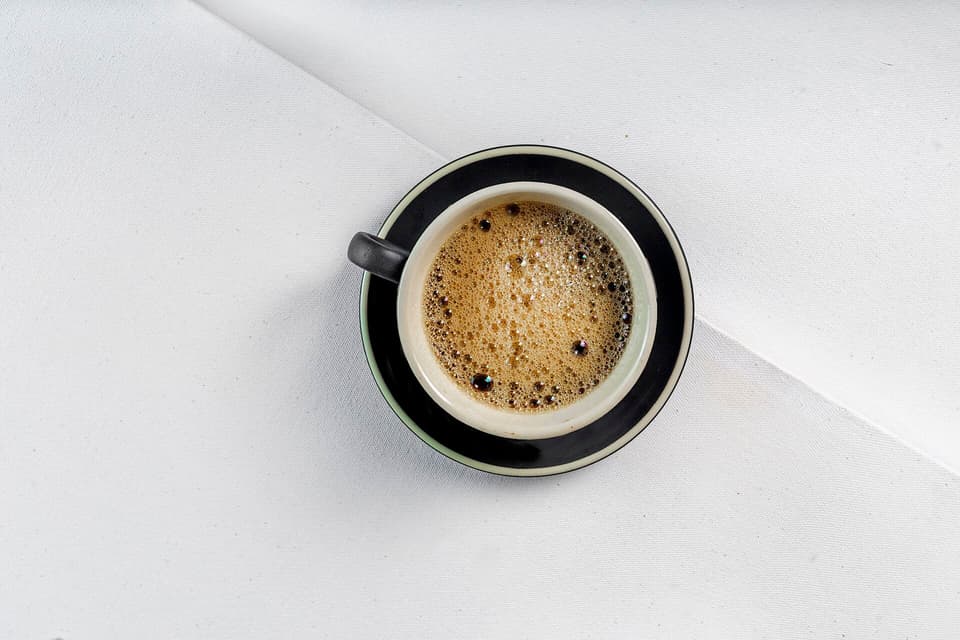
At the bar: what to order
The first five minutes set the tone, so go to the bar early and order clearly. A drink in your hand is a quiet signal that you're sorted, and you'll get far fewer offers.
- Tonic or soda with lime in a tall glass with plenty of ice. It looks like a gin and tonic, which ends most conversations before they start.
- Ginger beer with a wedge of lime. A grown-up drink with a bit of bite.
- An alcohol-free beer or wine, if the venue has a good one and it suits you.
- A "mocktail" from the menu. More and more bars now have proper alcohol-free cocktails. Ask the bartender for something "not too sweet"; they're usually delighted to make one.
- Hot drinks later in the evening. An espresso at 9 pm is a fine party trick, and keeps you bright for the dancing.
A note on labels. In the UK, government guidance says "alcohol free" should mean no more than 0.05% alcohol, "de-alcoholised" no more than 0.5%, and "low alcohol" no more than 1.2%. Other countries use different rules, so if you need none at all, check the label or ask. For lots more ideas, see my list of 30 things to drink instead of alcohol.
And rounds? Rounds are the enemy of anyone with a plan. You can politely step out: "I'll get my own tonight, I'm on the soft stuff." Or buy one round early, when it's cheap and easy, and then you've done your part.
What to say when someone asks
Someone will ask. Often it's just curiosity, sometimes it's a colleague who'd feel better if you were drinking too. The NIAAA's Rethinking Drinking guide suggests you "know your no" and say it quickly, before you've had time to wobble. A few lines that work at a party:
- "I'm good, thanks." Hold up your glass. Smile. Ask them about their holiday plans.
- "I'm doing a month off." In December, this makes you sound organised, not odd.
- "I'm driving." The single most respected sentence at any Christmas party.
- "I've got an early start tomorrow." Even better if it's true, and on a Friday party it often is.
- "I just feel better without it." Honest, simple and very hard to argue with.
You don't owe anyone your medical history, your faith or your life story. If a colleague keeps pushing, a little light humour usually ends it: "One of us has to remember this party, and I've volunteered." My guide to not drinking when your friends do has more ideas, including for the persistent ones.
The middle of the party: how to actually enjoy it
Here's the secret: most people don't go to the Christmas party for the wine. They go for the people, the gossip, the music and the sense of a year finished. All of that is still there.
- Be the one who asks questions. People love talking to someone who listens. Ask the new starter how they're settling in. Ask the boss what they're doing over the holidays. You'll be remembered as great company.
- Have a job. Help the organiser with the Secret Santa, take the photos, run the quiz. A role gives your hands something to do and your evening a shape.
- Dance. Dancing without a drink is a skill, and like most skills it takes about one song to learn. Nobody is watching you; they're all worried about their own moves.
- Raise your glass for the toast. Whatever's in it. Nobody checks.
- Notice the moment it turns. Every party has a point when the conversations start to repeat and the volume goes up. That's your cue.
Leaving on a high
The best time to leave a party is while you're still enjoying it. Say a warm goodbye to two or three people, thank the organiser, and go. Some people prefer to slip out quietly; at a big party, very few will notice, and nobody will mind. You'll be home, warm and asleep while others are still trying to find their coat.
Then comes the best part. On the morning after, you wake up with a clear head, remember every conversation, and can read the group chat with pure joy instead of slow dread. Many people report sleeping better on nights they don't drink. A 2013 research review by Irshaad Ebrahim and colleagues found that alcohol can help people fall asleep faster but tends to disturb the second half of the night. My guide to sleep without alcohol has more on what many people notice. This is not medical advice; ask your doctor about your own sleep and health.
If you're organising the work Christmas party
A good party works for everyone, including the people who don't drink, and there are many of them: drivers, people who are pregnant, people whose faith rules alcohol out, people taking medicines, people who simply don't want to. In Drinkaware's 2024 survey, 41% of employees said their party would include alcohol and 19% said it would not. A party without a free bar is completely normal now.
- Make the alcohol-free drinks good, and put them on the menu by name, not "soft drinks available on request".
- Serve real food, and serve it early.
- Think about the activity, not just the bar: a long lunch, a cooking class, bowling, a quiz, an escape room. People mix more when they're doing something together.
- Set a clear end time and help people get home safely, with taxi numbers or a plan for late transport.
- Never push drinks or rounds of shots. Nobody should have to explain why they're not drinking at a work event.
And the rest of the season
The office party is often just the start. There are friends' drinks, family visits, the mulled wine at the Christmas market, and the long, sleepy days between Christmas and New Year. The same skills carry you through all of it: decide in advance, bring your own drink, have your line ready, leave on a high. For a warm alcohol-free mulled drink, simmer apple juice with cinnamon, cloves, star anise and orange peel, or make a spiced hibiscus tea with a slice of orange for less sugar. If you're in the US, my guide to Thanksgiving without alcohol is a good rehearsal. And if you'd like to use December to plan a proper January, see my four-week plan for a new year fresh start.
A whole month away, from 1 January 2027
Some people find it much easier to step away from alcohol somewhere new, far from the office, the usual bar and the usual invitations. The first Quiet Month starts on 1 January 2027. It's a month for up to four guests in one calm place: shared low-carb, keto-style meals, daily exercise, short meditation and long talks, with no alcohol, no smoking and no drugs for the whole month. I am self-taught in nutrition, and if a guest wants to try an eating window, I set it after our video call and adjust it as the month goes. It is not medical, not therapy and not rehab.
- Minimum stay: one month. Programme fee: US$10,000 for the month. You book and pay for your own flat, flights and insurance.
- Start dates: the first month starts on 1 January 2027, then on the 1st of every month. You can apply at any time.
- How to pay: after a free video call and a signed agreement, a US$1,000 deposit by bank transfer or Western Union, then the balance in two halves on day 1 and day 15.
- Where: the country and city are shared after the video call and before you sign. I never publish where I am.
See the January 2027 month, how a day works, the price and what's included, and the safety steps.
Start at home, for free
Want to practise before the party season? My free 7-day plan for a quiet week at home has walks, simple low-carb meals, short meditations and a printable checklist. The 31-day planner fits a whole month on one page. If you'd like the week by email, join my occasional letters; one click to unsubscribe.
Go to the party. Eat the mince pie. Dance badly. Remember everything. Merry Christmas.
Questions people ask
How can I enjoy a Christmas party without drinking?
Eat before you go, decide your drink and your leaving time in advance, and order early so you always have a glass in hand. Focus on the people: ask questions, take a role like photos or the quiz, dance, and leave while you're still enjoying it.
What should I order at a work party if I'm not drinking?
A tall tonic or soda with lime, ginger beer, an alcohol-free beer or wine, or a mocktail from the menu. Later on, an espresso or a hot drink. Check labels if you need no alcohol at all: in the UK "alcohol free" means up to 0.05%, but rules differ by country.
What do I say if colleagues ask why I'm not drinking?
Keep it short: "I'm good, thanks", "I'm doing a month off", "I'm driving" or "I just feel better without it". You don't owe anyone an explanation. Then ask them a question about themselves.
Is it OK to skip the office Christmas party?
Yes, though it's often worth going for an hour or two to talk to people from other teams. Sort your December invitations into the ones that matter, the ones you'd enjoy and the ones you'd go to out of guilt, and politely skip the last group.
When does the first Quiet Month start?
On 1 January 2027, then on the 1st of every month. You can apply at any time. The programme fee is US$10,000 for the month, for up to four guests, and you pay for your own flat. It is not medical, not therapy and not rehab.
Sources
- Drinkaware (5 December 2024): Festive drinking patterns report (OnePoll survey of 2,300 UK adults, 11 to 18 November 2024; work parties and pressure from colleagues)
- Gallup (13 August 2025): U.S. drinking rate at new low as alcohol concerns surge (54% of US adults drink; 50% of 18 to 34-year-olds)
- Gollwitzer PM, Sheeran P (2006), Advances in Experimental Social Psychology 38: Implementation intentions and goal achievement, a meta-analysis (94 tests; medium-to-large effect of "if, then" plans)
- GOV.UK: Low alcohol descriptors (guidance) ("alcohol free" up to 0.05% ABV; "de-alcoholised" up to 0.5%; "low alcohol" up to 1.2%)
- NHS: Tips on cutting down on alcohol (let others know; alternate with non-alcoholic drinks)
- NIAAA, Rethinking Drinking: Tips to try ("Know your no"; say no fast)
- Ebrahim IO, Shapiro CM, Williams AJ, Fenwick PB (2013), Alcoholism: Clinical and Experimental Research 37(4): Alcohol and sleep I, effects on normal sleep (faster sleep onset, more disturbed second half of the night)
- The Quiet Month: price and what's included (programme fee, what is not included)
Prices and facts were checked on 23 October 2026. Prices change; always check the source before you book anything.