Guide · Dry January 2027
Dry January day by day: what to expect, week by week
Everyone's month is different, but the shape is often similar: a keen first weekend, a wobbly second week, a quieter third and a satisfied finish. Here is what people commonly report, day by day, in January 2027, and what the research did and didn't measure.
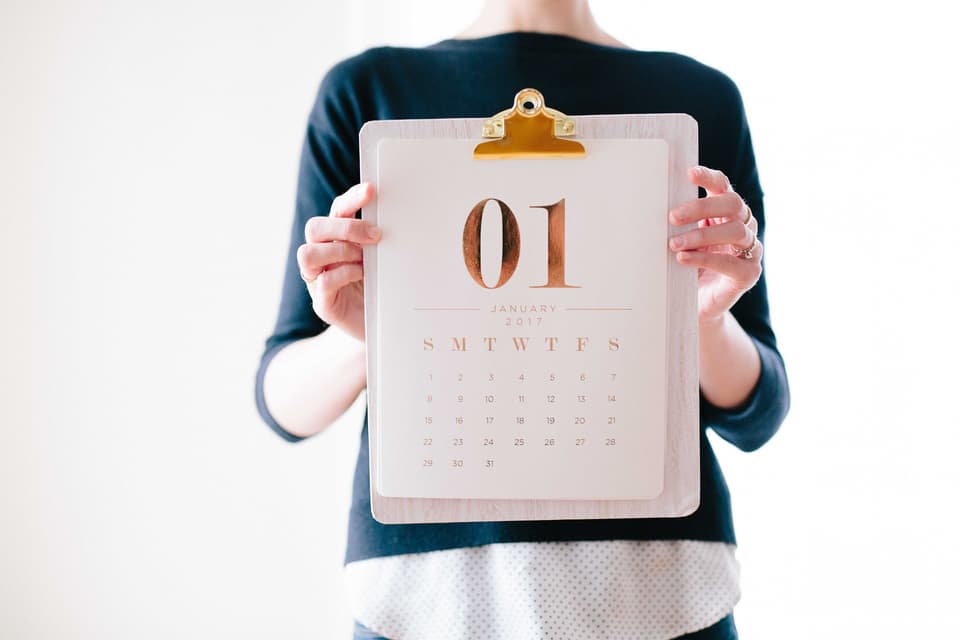
Photo is illustrative, not from a past month. Credits.
Quick answer. Days 1 to 3: mostly about breaking the routine; sleep can be restless. Days 4 to 7: evenings get easier, the first weekend is the test. Days 8 to 14: many people report better sleep and mornings, but week two often feels hardest. Days 15 to 21: the habit loosens; urges usually come less often. Days 22 to 31: money and energy are noticeable for many. These are common reports, not promises. If you drink heavily or every day, talk to a doctor before you stop.
Dry January 2027 starts on a Friday and ends on a Sunday. That's useful: you get a long first weekend to settle in, and a weekend at the end to mark it. Below is what people commonly describe at each stage. Read it as a map of the road, not a promise of the scenery; your own month will have its own surprises.
Please read this first. If you drink heavily or every day, or use other drugs daily, stopping suddenly can be dangerous. Talk to a doctor before you stop. The Quiet Month is not medical, not therapy and not rehab. In a crisis, call your local emergency number or find a free helpline at findahelpline.com. More in our questions.
Before you read on: what we know, and what we don't
Most of what we know about Dry January comes from surveys of people who took part. In a University of Sussex survey (de Visser, 2019, reported by Alcohol Change UK), 86% said they saved money, 70% slept better, 66% had more energy and 54% lost some weight. Those are self-reports, not a trial. A small 2018 study in BMJ Open measured 94 moderate-to-heavy drinkers who stopped for a month and found average falls in blood pressure, weight and insulin resistance compared with 47 who kept drinking. It wasn't randomised. Nobody can tell you what your own body will do on day 12, and anyone who does is guessing.
Days 1 to 3 (Fri 1 to Sun 3 January): breaking the routine
- Day 1 often feels easy: New Year's Day, many people tired from the night before, a strong reason fresh in mind.
- Day 2 and 3 are the first real evenings. The cue (6 pm, the sofa, the takeaway) arrives, and the drink doesn't. That gap can feel strange.
- Sleep can be restless for the first few nights. Alcohol makes some people drop off faster but breaks up the second half of the night, so it can take a few nights to settle into a new pattern.
What helps: clear the house, stock a drink you like, and write your reason in one sentence.
Days 4 to 7 (Mon 4 to Thu 7 January): back to work
- The first working week brings the first "go on, just one".
- Many people notice mornings feel a little clearer by the end of the week.
- The 6 pm moment is the hard one. Put something else in it: a walk, a shower, a proper alcohol-free drink.
Days 8 to 10 (Fri 8 to Sun 10 January): the first full weekend of the year
This is the first real test for most people. Plan Friday night in advance with an "if-then" plan: "If it's 7 pm on Friday and I want a drink, then I'll make a ginger and lime soda and start cooking."
Weekend mornings are where many people first feel the difference: up early, clear, with a whole Saturday ahead.
Days 11 to 14 (Mon 11 to Thu 14 January): the second-week dip
Week two is often the hardest. The novelty has worn off, the reasons feel far away, and January is long and dark in much of the world. Some people feel flat or irritable.
What helps: reread your reason, tell one person what you're doing, and lower the bar: you don't need to feel amazing, only to not drink today. Alcohol Change UK says people who use support (an app or daily emails) are roughly twice as likely to finish the month dry.
Rowan is our AI assistant. Please keep health details for the video call.
Days 15 to 17 (Fri 15 to Sun 17 January): halfway
- Halfway is a natural moment to look back. Many people say sleep is better by now, and evenings feel less like a gap.
- The money is visible. Use the Dry January calculator to see your own figure.
- Urges tend to come less often and pass faster. Ten minutes and a glass of water often see one off.
Days 18 to 21 (Mon 18 to Thu 21 January): the habit loosens
Three weeks in, the new evening routines usually feel less like effort. That doesn't mean the habit is gone. In a well-known University College London study, it took people an average of 66 days for a new daily habit to feel automatic, with a range from 18 to about 254. Thirty-one days is a strong start, not a finish line.
Days 22 to 24 (Fri 22 to Sun 24 January): the long weekend feeling
Many people say this is when energy is most noticeable: more done on Saturday, fewer wasted Sundays. It's also when overconfidence creeps in ("I've proved I can, so one won't hurt"). Decide in advance: the month is 31 days.
If you've slipped by now, don't restart and don't give up. Carry on tomorrow. Read what to do if you drank during Dry January.
Days 25 to 28 (Mon 25 to Thu 28 January): payday and planning
- Late-January payday is a classic trigger. Plan it like a Friday.
- This is the time to decide February calmly: another month, drink-free weekdays, a weekly limit (the UK guideline is no more than 14 units a week, spread over three or more days), or only when it's really worth it.
Days 29 to 31 (Fri 29 to Sun 31 January): the finish
Mark it, without making it about a drink: a good dinner, a morning walk, something bought with the money you kept. Look back at what changed. A Sussex study of more than 6,000 people found many participants were still drinking less months later.
If you do drink again in February, go slowly: after a month off, the same amount can affect you more than you expect.
Week by week, side by side
| Week | Dates (2027) | What people often notice | One thing to do |
|---|---|---|---|
| Week 1 | Fri 1 to Thu 7 Jan | Routine gaps, restless nights, strong motivation | Clear the house; plan the 6 pm slot |
| Week 2 | Fri 8 to Thu 14 Jan | First full weekend; the dip; better mornings for many | Tell one person; reread your reason |
| Week 3 | Fri 15 to Thu 21 Jan | Halfway; fewer urges; money visible | Run your numbers; try a new evening activity |
| Week 4+ | Fri 22 to Sun 31 Jan | More energy; overconfidence; payday | Decide your February rule; plan the finish |
When to talk to a doctor
If you drink heavily or every day, talk to a doctor before you stop: stopping suddenly can be dangerous. During the month, get help if you feel shaky, sweaty, sick or very unwell, or if low mood lasts. In a crisis, call your local emergency number or find a free helpline at findahelpline.com.
For what may change in the body over a month, read what happens when you stop drinking for a month; for the research, Dry January benefits.
Free from 1 January 2027: the Dry January email challenge. One short email each morning for 31 days, with one small thing to do. Double opt-in, one-click remove, nothing else sent.
- Dry January calculator: the money, calories and units your month off keeps, from your own numbers.
- 31-day alcohol-free challenge: one small task a day, a printable checklist, nothing to sign up for.
- Dry January email challenge: one short email a day from 1 January 2027, free, one-click unsubscribe. Everything else is in the Dry January hub.
Where The Quiet Month fits
The days that worry people most, the second week and the first weekends, are the ones that feel easiest in a quiet place where nobody else is drinking either.
The Quiet Month is a calm month away for up to four guests, each in their own private flat a short walk from me: slow mornings, a short, always optional meditation, daily movement, shared low-carb meals and long evening talks, with no alcohol, no smoking and no drugs for anyone, me included. The first month starts on 1 January 2027, then on the 1st of every month. Honestly: I'm self-taught, not a doctor or counsellor, and The Quiet Month is not medical and not therapy. Every guest is 21 or over and brings a doctor's fit-to-join letter. I don't publish where I am; after a free video call, if we both want to go ahead, you learn the country and city before you sign anything, and nothing is paid before that call and a signed agreement. The programme fee is US$10,000 for the month; your flat and flights are extra. See the January 2027 month and what the fee includes.
Email me first at info@thequietmonth.com, start step 1 of the application (about five minutes, free, no commitment), or book a free 20-minute call.
The Quiet Month team
Questions people ask
What happens on day 3 of Dry January?
For many people it is the first ordinary evening without a drink, so the routine gap is the main thing they notice. Sleep can be restless for the first few nights. Experiences vary.
Which week of Dry January is the hardest?
Many people say week two: the novelty has gone and the reasons feel far away. Support helps; Alcohol Change UK says people who use support are roughly twice as likely to finish.
When do you start to feel better in Dry January?
Many people report better sleep and clearer mornings within the first two weeks, but it varies a lot. These are self-reports, not promises.
What day does Dry January 2027 start and end?
It runs from Friday 1 January to Sunday 31 January 2027.
Is it safe to stop drinking suddenly?
For most light and moderate drinkers, yes. If you drink heavily or every day, talk to a doctor before you stop, because stopping suddenly can be dangerous.
Sources
- Alcohol Change UK: The evidence behind the Dry January challenge (de Visser 2019: 86% saved money, 70% slept better, 66% more energy, 54% lost weight; support roughly doubles the chance of a dry month; read 3 Nov 2026)
- Mehta G et al. (2018), BMJ Open: Short-term abstinence from alcohol and changes in cardiovascular risk factors, liver function tests and cancer-related growth factors (94 people abstaining vs 47 drinking; not randomised)
- University of Sussex (2020): Take part in Dry January and you'll reap the benefits for months (over 6,000 people surveyed; self-reported)
- Sleep Foundation: Alcohol and sleep (lighter, more broken sleep in the second half of the night)
- BPS Research Digest: How long does it take to form a habit? (Lally et al., UCL) (average 66 days, range 18 to a predicted 254)
- NHS: Calculating alcohol units (14 units a week, spread over 3+ days; read 3 Nov 2026)
- NHS: Alcohol support (see a GP first; Drinkline 0300 123 1110; read 3 Nov 2026)
- Find A Helpline: free helplines in many countries
Prices and facts were checked on 3 November 2026. Prices change; always check the source before you book anything.