Seasonal · January 2027
Damp January 2027: how to drink less without quitting (and when to go fully dry)
Not everyone wants a dry January. Some people want a damp one: fewer drinks, more clear evenings, but still a glass of wine at a friend's birthday. It's a sensible idea, and it's growing fast. It also has a sneaky catch that nobody mentions. Here's how to do Damp January 2027 well, the rules that actually work, and an honest look at when a fully dry month turns out to be the easier option.
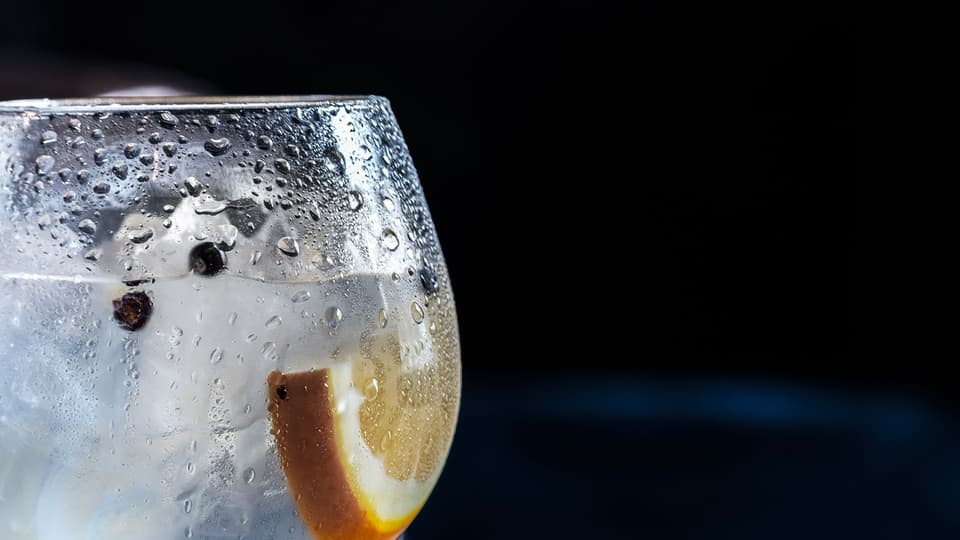
Photo is illustrative, not from a past month. Credits.
"Damp January" sounds like a weather forecast for most of northern Europe. In fact it's a simple, popular idea: instead of stopping completely for the month, you drink noticeably less. Fewer drinking days, smaller amounts, more alcohol-free evenings. No grand vow, no all-or-nothing.
Thinking of spending some or all of January away? Start with my Dry January retreat 2027 guide: the short answers, the cost, and every January guide in one place.
Want it on paper? The free Dry January 2027 planner is a printable 31-day calendar with one small prompt a day, no sign-up.
I'm a fully-dry person myself, and The Quiet Month is a fully alcohol-free month. But I think Damp January deserves a fair, practical guide, because lots of people want to drink less without making it a big deal, and that's a perfectly good goal. This is that guide: what it is, five rules you can pick from, how to count, a four-week plan, and the honest bit about where damp goes wrong.
Please read this first. If you drink heavily or every day, or use other drugs daily, stopping suddenly can be dangerous. Talk to a doctor before you stop. The Quiet Month is not medical, not therapy and not rehab. In a crisis, call your local emergency number or find a free helpline at findahelpline.com. More in our questions.
The short version
- Pick one clear rule, not a vague hope. "Only on Fridays and Saturdays" works. "Less than usual" doesn't.
- Count in units or standard drinks. A big glass of wine is often two or more, not one.
- Make home alcohol-free. Most extra drinks happen on the sofa, not in the pub.
- Plan your alcohol-free drinks before you go out, and alternate if you do drink.
- Know the catch: damp means a decision every evening. For many people, a fully dry month is actually easier.
- Try a dry fortnight inside your damp month. It's the best way to find out which suits you.
What is Damp January?
Damp January isn't an official campaign with a charity behind it; it's an informal name for cutting down in January rather than stopping. People make up their own rules. Some only drink at weekends. Some set a weekly limit. Some stop at home but allow drinks out.
It's growing quickly. In a December 2025 survey of 1,000 US adults by the research firm Drive Research, 15% said they did Damp January in 2025, up from 11% the year before. In the same survey, almost half (48%) said they planned to drink less in the coming year, and only 5% planned to drink more.
The wider trend points the same way. In Gallup's July 2025 survey, just 54% of US adults said they drink at all, the lowest in nearly 90 years of asking. And for the first time a majority, 53%, said that even moderate drinking, one or two drinks a day, is bad for your health. In the UK, a November 2024 survey for the charity Drinkaware found 56% of drinkers intended to cut back in the new year, with drink-free days the most popular method.
So if you're thinking "less, but not nothing", you're in very large company.
Why people choose damp, not dry
- January has a birthday, a wedding or a work trip in it, and they'd rather not spend it explaining.
- They've tried a dry month before and found the all-or-nothing rule made one slip feel like total failure.
- They want a habit that lasts into February, not a 31-day sprint followed by a big Saturday night.
- They're not sure they want to stop, but they'd like to know how it feels to drink less.
All good reasons. The thing to keep in mind is why you're cutting down. The US Surgeon General's 2025 advisory on alcohol and cancer noted that for some cancers, risk may start to rise at around one drink a day or less. In the UK, the NHS advises not regularly drinking more than 14 units a week, spread over three or more days, with several drink-free days. Less really is better, and every alcohol-free day counts.
Five Damp January rules (pick one)
The biggest mistake with Damp January is having no rule at all. "I'll just drink less" lasts until about the second Tuesday. Pick one of these, write it down, and tell someone:
| Rule | How it works | Best for |
|---|---|---|
| Weekends only | Alcohol only on Friday and Saturday; Sunday to Thursday are alcohol-free | People whose drinking has crept into weeknights |
| Out, not in | No alcohol at home at all; drinks only when out with people | People who mostly drink on the sofa |
| The weekly number | A fixed number of units or standard drinks per week, well under your usual | People who like counting and tracking |
| The two-drink cap | On any day you drink, a maximum of two, decided before you start | People who rarely drink on weeknights but drink a lot when they do |
| Four dry days a week | At least four alcohol-free days every week, any four you like | People with unpredictable social calendars |
Whatever you choose, make it specific enough that you'd know if you broke it. "Weekends only" is clear. "Mostly weekends" is a loophole wearing a scarf.
Broke your rule, or had a drink during a fully dry month? Read what to do the next morning, before you give up on January.
How to count (most people under-count)
Damp January only works if you know what you're actually drinking, and drinks are bigger and stronger than most of us think. The NHS defines one UK unit as 10ml, or 8g, of pure alcohol. Some useful numbers from the NHS unit guide:
- A standard 175ml glass of 12% wine is 2.1 units. Many bars pour 250ml, which is three.
- A bottle of 12% wine is about 9 units. Share one between two and you've each had four and a half.
- A pint of 4% beer is about 2.3 units. A pint of a stronger craft beer can easily be three or more.
- A single 25ml measure of 40% spirit is 1 unit. Home measures are usually larger.
In the US, the National Institute on Alcohol Abuse and Alcoholism (NIAAA) uses a "standard drink" of 14g of pure alcohol: roughly a 12oz regular beer, a 5oz glass of wine or a 1.5oz shot of spirits. Its free Rethinking Drinking site has practical tips for cutting down.
A simple habit: pour at home with a measure, and choose smaller glasses. Your eyes are generous; a measure isn't.
Rowan is our AI assistant. Please keep health details for the video call.
A four-week Damp January plan
- Week 1 (1 to 4 January): reset. Start with a few completely alcohol-free days, even if your rule allows more. After December, a short dry start makes everything after it easier. Clear the leftover Christmas bottles out of sight. Stock the fridge with alcohol-free drinks you like.
- Week 2 (5 to 11 January): the routine. Back to work, back to normal life. This is where the rule earns its keep. Plan your alcohol-free evenings in advance: a class, a walk, a film, a friend for dinner. Ideas in what to do instead of drinking.
- Week 3 (12 to 18 January): the test. The novelty is gone and your social diary is filling up again. If you're going out, decide your number before you leave, and alternate: one alcoholic drink, then one alcohol-free. Drinkaware calls this "zebra striping".
- Week 4 (19 to 31 January): the review. Look at your notes. How many alcohol-free days did you have? How did you sleep? What were the hardest moments? Decide which one habit you'll carry into February.
Writing one line a day helps more than you'd think: what you drank (or didn't), how you slept, how you felt. Pattern-spotting is the whole point of a damp month. The free 31-day quiet month planner has a box for each day.
Going out on a damp month
- Start with an alcohol-free drink. The first drink of the evening is usually the fastest. Make it a soft drink and you've slowed the whole night down.
- Decide your number before you leave, and tell a friend. A number decided at 11pm is not a number.
- Alternate. One alcoholic, one alcohol-free. Drinkaware suggests planning your alcohol-free choices before you go out.
- Avoid rounds, or buy yourself out of them. Rounds set your pace to the fastest drinker in the group.
- Eat first. Hungry and tired at 7pm is a bad time to make decisions about wine.
For lines to use when someone pushes, see how to not drink when your friends do. They work for "not another one" as well as "not at all".
The honest catch: damp is harder than it looks
Here's the thing nobody mentions. A dry month has one rule and one decision: "I'm not drinking." You make it once, on 1 January, and then you mostly just live. A damp month has a decision every single day. Is today a drinking day? Is this the second drink or the third? Does this count as "out"? Does a large glass count as two?
Each of those decisions is small. But they arrive in the evening, when you're tired, hungry and surrounded by people having a nice time, which is exactly when decisions are hardest to make well. It's why many people find that "just one" turns into three, and why a damp month can quietly turn into an ordinary month with a nicer name.
There's also good evidence on the dry side. Researchers at the University of Sussex, led by Dr Richard de Visser, followed people who took part in Dry January. In the 2019 group, 84% reported saving money, 72% said they slept better and 80% felt more in control of their drinking; six months later they were still drinking less than before. In an earlier study, people who did the month went from 4.3 to 3.3 drinking days a week on average by August. The researchers found smaller benefits even for people who didn't manage the full month, which is good news for damp-ers too.
So my honest view is this: damp is a good goal, and dry is often the easier way to reach it. Lots of people find that one fully clear month resets their habits so well that they drink less for the rest of the year, without having to count every glass.
A middle way: damp month, dry fortnight
If you can't decide, do both. Plan a damp January, but make the first two weeks, 1 to 14 January, completely alcohol-free. Then switch to your damp rule for the second half.
- You get the clean start after December, when your body and your diary most need it.
- You learn something. Two weeks is long enough to notice changes in sleep, mood and mornings. Many people are surprised.
- You choose with real information. On the 15th, you might keep the damp rule, or you might think "actually, I'll carry on". Both are fine.
If you'd like to know what usually changes, week by week, read what happens when you stop drinking for a month. If you go fully dry, my practical plan for Dry January 2027 takes you through all five weekends.
"Dry January" is a registered trademark of Alcohol Change UK. The Quiet Month is not linked to the charity.
Signs a damp month isn't working
Be kind to yourself, and honest. These are worth noticing:
- You keep changing the rule to fit what you've already drunk.
- Your "drinking days" are getting bigger to make up for the dry ones.
- You find it hard to stop once you've started, even when you planned to.
- You feel shaky, sweaty or unwell on your alcohol-free days.
The last one matters most. If cutting down makes you feel physically unwell, please talk to a doctor before going further; stopping suddenly can be dangerous for people who drink heavily. And if you find you simply can't cut down when you want to, that's useful information too, and worth a conversation with your doctor. It's a sensible, grown-up step.
Company for January: 30 Quiet Days (free)
If you'd like a little help with your damp, or dry, January, 30 Quiet Days is our free programme, 1 to 31 January 2027: one short email each morning with one idea and one small thing to try, and an optional daily check-in with Rowan, our AI assistant (he is an AI and says so). Importantly for this article: you don't have to be sober to join. It's built for people drinking less as well as people stopping. No streaks, no guilt, and you can leave with one click.
Prefer real people? Circles are small groups with a host and one good question a day. And if you're doing January with someone who'll still be drinking, this guide for couples has the house rules.
Or try a fully clear month, with none of the decisions
Here's the gentlest way I know to take every one of those daily decisions away: go somewhere with no alcohol in the house at all, with good food, daily movement and a few good people.
The first Quiet Month starts on 1 January 2027. Up to four guests, each in their own private flat about ten minutes' walk from me. Shared low-carb meals, daily exercise at your own pace, 10 to 20 minutes of meditation if you want it, outings, and long talks in the evening. One free day a week. No alcohol, no smoking and no drugs for anyone, me included.
Honestly: I'm self-taught, not a doctor or counsellor. The Quiet Month is not medical, not therapy and not rehab. Every guest is 21 or over and brings a doctor's fit-to-join letter. I don't publish where I am; after a free video call, if we both want to go ahead, you learn the country and city before you sign anything. The fee is US$10,000 for the month, plus your own flat and flights, and nothing is paid before a video call and a signed agreement. See what's included.
Email me, apply (about three minutes, free, no commitment), or book a free 20-minute call. Damp, dry or somewhere in between, I hope January 2027 is a good one.
Doing January at home instead? Read Dry January 2027, somewhere quiet, or join the free 30 Quiet Days emails.
Questions people ask
What is Damp January?
Damp January is an informal name for drinking noticeably less in January rather than stopping completely. People set their own rule, such as drinking only at weekends, no alcohol at home, a weekly limit, or at least four alcohol-free days a week.
How many people do Damp January?
In a December 2025 survey of 1,000 US adults by Drive Research, 15% said they did Damp January in 2025, up from 11% in 2024. Almost half planned to drink less in the coming year.
What are the rules of Damp January?
There's no official rulebook, which is why it helps to choose one clear rule and write it down. Good options: weekends only, out but not at home, a fixed weekly number of units, a two-drink cap on drinking days, or at least four dry days a week.
Is Damp January better than Dry January?
It depends on you. Damp can fit a busy social life, but it means a decision every evening, which many people find harder than a single "I'm not drinking" rule. University of Sussex research found people who did a dry month were still drinking less six months later. A good compromise is a damp month that starts with a fully dry fortnight.
How many units is a glass of wine?
According to the NHS, a standard 175ml glass of 12% wine is 2.1 units, and a 750ml bottle of 12% wine is about 9 units. A large 250ml glass is around three units. One UK unit is 10ml, or 8g, of pure alcohol.
Can I join 30 Quiet Days if I'm still drinking?
Yes. 30 Quiet Days, free from 1 to 31 January 2027, is open to people drinking less as well as people stopping. One short email each morning and an optional daily check-in with Rowan, an AI assistant. No streaks and no guilt.
Sources
- Drive Research (10 December 2025): Dry January statistics (online survey of 1,000 US adults; Damp January 15% in 2025 vs 11% in 2024; 48% plan to drink less)
- Gallup (13 August 2025): U.S. drinking rate at new low as alcohol concerns surge (54% drink; 53% say moderate drinking is bad for health)
- Drinkaware: Two thirds of UK drinkers intend to drink more over Christmas (5 December 2024) (56% intend to cut back in the new year; drink-free days most popular method)
- Drinkaware: What is zebra striping and why is it becoming popular?
- NHS: Calculating alcohol units (one unit = 10ml or 8g pure alcohol; 175ml glass of 12% wine = 2.1 units)
- NHS: The risks of drinking too much (14 units a week guidance)
- NIAAA: What is a standard drink? (US standard drink = 14g pure alcohol)
- NIAAA, Rethinking Drinking: Tips to try
- US Department of Health and Human Services: Surgeon General's Advisory on Alcohol and Cancer Risk (January 2025)
- University of Sussex: Take part in Dry January and you'll reap the benefits for months (de Visser; 2019 participants: 84% saved money, 72% slept better, 80% more in control; self-reported surveys)
- Smithsonian Magazine: Dry January has benefits all year long (2018 cohort, drinking days 4.3 to 3.3 per week by August)
- Find A Helpline: free helplines in many countries
Prices and facts were checked on 25 October 2026. Prices change; always check the source before you book anything.