Guide · Screens and sleep
How to stop doomscrolling: a calm 30-day plan (no phone-smashing required)
It is 12.40am. You picked up your phone to set an alarm. You now know a great deal about a flood in a country you have never visited, a celebrity divorce and the price of eggs in 1974. Here is why doomscrolling is so sticky, what the research actually says, and a gentle 30-day plan to scroll less.
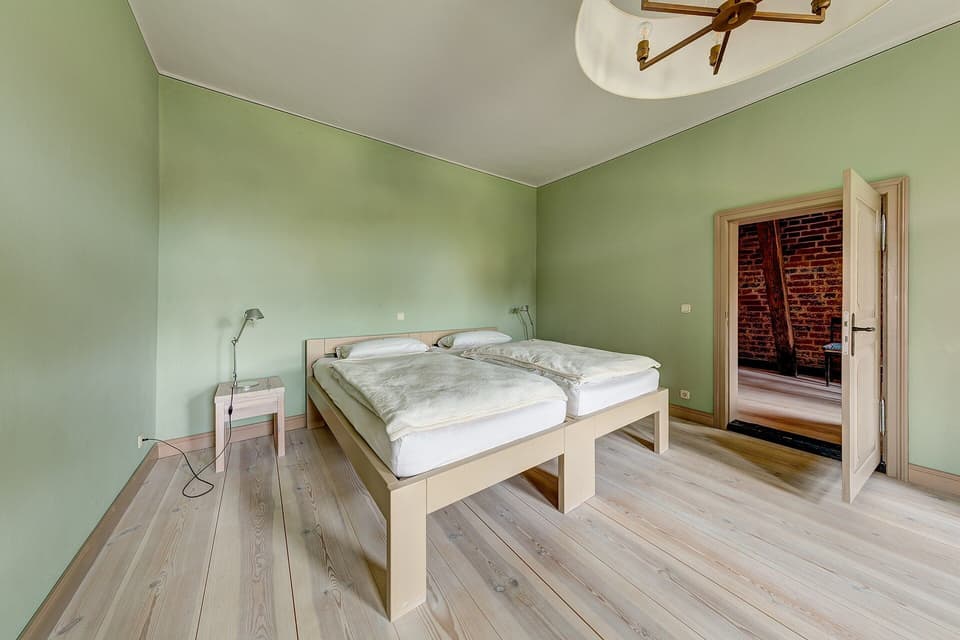
Photo is illustrative, not from a past month. Credits.
Nobody sits down and says, "Tonight I will spend ninety minutes reading bad news in bed until my eyes feel like sandpaper." And yet here we all are. The thumb moves on its own. One more story. One more video. One more thread of strangers arguing about something that will be forgotten by Thursday.
If you have searched for how to stop doomscrolling, the good news is that you don't need to throw your phone in a lake. You need a few small changes to the phone, the room and the evening, and a month to let them settle. This guide explains why the habit is so sticky, what the research says (carefully, without big promises), and gives you a plain 30-day plan. It is written by someone who once read the entire history of a shipping container company at 2am. No judgement here.
What doomscrolling actually is
Doomscrolling means scrolling on and on through bad or upsetting news, even when it makes you feel worse. The word was around on social media by 2018 and took off in 2020, when a lot of the world was stuck indoors with a phone and plenty of bad news to read. Merriam-Webster added it to its dictionary in September 2023, which is the dictionary's polite way of saying "fine, this is a thing now".
It is a close cousin of plain "endless scrolling" of videos and feeds. The content differs, but the pattern is the same: no natural stopping point, a little pull to see what is next, and a strange feeling afterwards that you spent an hour and got nothing back.
Why it is so hard to stop
First, some comfort: this is not a lack of character. There are at least three good reasons your thumb keeps going.
- Our brains lean towards bad news. In a 2019 study in PNAS, Stuart Soroka and colleagues measured the body's reactions (things like skin response and heart rate) of 1,156 people in 17 countries while they watched news stories. On average, negative stories caused stronger reactions than positive ones, across very different countries. Bad news grabs us. It always has. Our ancestors who ignored the rustle in the bushes did not get to be ancestors.
- There is no bottom. Old newspapers ended. Feeds do not. Aza Raskin, the designer often credited with inventing infinite scroll in 2006, has since said publicly that he regrets what it became. When a page never ends, the only stopping point is the one you bring yourself.
- Feeling unsure makes us check. When something big is happening, refreshing feels like staying safe. It mostly isn't. The flood, the election or the markets will not be changed by you reading the same update for the fourth time.
And many of us are noticing. The Reuters Institute's Digital News Report, a yearly survey of around 100,000 people in dozens of countries, found in 2025 that about four in ten people sometimes or often avoid the news, up from 29% in 2017. Among the reasons people give: the effect on their mood, and feeling worn out by the sheer amount of it. So if you want less of it, you are not odd. You are in a very large club.
What the research says about scrolling less
There is no huge study of a magic "doomscrolling fix", and I would be wary of anyone selling one. But a few good studies look at cutting back, and they are worth knowing. Read them as hints, not promises.
- Less social media, less loneliness. In a 2018 study by Melissa Hunt and colleagues at the University of Pennsylvania, 143 students were split into two groups. One group limited Facebook, Instagram and Snapchat to 10 minutes per app per day for three weeks. Compared with the group who carried on as normal, they reported feeling less lonely. It was a small study of students, so take it gently.
- A month off Facebook. In a large 2020 study in the American Economic Review, Hunt Allcott and colleagues paid people to deactivate Facebook for four weeks. Those who did it freed up about an hour a day, reported a small rise in well-being, and kept using Facebook less even after the experiment ended. They also knew a little less about the news. Every choice has a price, and that one was fairly cheap.
- A grey phone is a duller phone. In a 2020 study, Alex Holte and Richard Ferraro asked college students to switch their phones to grayscale for a week. Their daily screen time dropped by nearly 40 minutes on average. Bright red notification dots look a lot less urgent in grey.
Put together: making the phone a little less shiny, a little less reachable and a little more boxed in seems to help many people. Not one heroic decision. Lots of small, boring ones.

Before you start: three quick questions
Take two minutes and answer these honestly. On paper, not in your notes app (you know why).
- When do I scroll most? For most people it is three moments: first thing in the morning, the gap after dinner, and in bed.
- What do I scroll? News, one particular app, short videos, or "just checking" everything in a loop.
- What would I rather be doing? Reading, sleeping, talking to the person on the sofa, a walk. Be specific. "Nothing" is a fine answer too.
Your answers are your plan. You don't need to fix every screen in your life. You need to fix the two or three moments that cost you the most.
A calm 30-day plan to stop doomscrolling
Why 30 days? Because a weekend off feels like a diet, and a month is long enough for the new habit to feel like yours. One focus each week, building as you go.
Week 1: make the phone boring
- Turn on grayscale. On iPhone it is under Accessibility, Display and Text Size, Colour Filters. On Android, look for Bedtime mode or Colour correction in Digital Wellbeing. It feels odd for a day, then it feels calm.
- Turn off every notification except calls and messages from real people. No breaking-news alerts. If it is truly important, someone will call you.
- Move the worst apps off your home screen and into a folder on the last page. Every extra tap is a tiny moment to change your mind.
- Sign out of one app you open without thinking. Signing back in takes a minute. That minute is your friend.
Week 2: take back the bedroom
- Charge the phone outside the bedroom. This is the single change most people say they wish they had made years ago. A cheap alarm clock does the job.
- Put a book by the bed, something easy and enjoyable, not homework. When the hand reaches for the phone, it finds a book.
- Pick a "screens off" time, 30 to 60 minutes before you want to sleep. My guide to sleep without alcohol has more simple evening habits, because the glass of wine and the phone often arrive together.
Week 3: put the news in a box
- Choose one or two news windows a day, for example 15 minutes at 8am and 15 minutes at 6pm. Outside them, no news.
- Read, don't refresh. One good summary from a source you trust is worth fifty updates. A weekly paper or newsletter is even calmer.
- Never in bed, never at meals. News gets a chair and a table, like a guest who is allowed in but not upstairs.
Week 4: fill the gaps with real things
This is the week that makes it last. If you only take things away, the gap fills itself with scrolling again. So put something better in each of your three moments:
- Morning: water, light, a few minutes outside before the phone. Five quiet minutes of breathing; my guide to meditation styles for beginners has six simple ones.
- After dinner: a 20-minute walk, a game of cards, a phone call (an actual call) to a friend.
- In bed: the book. Or simply lights out earlier. Sleep is very underrated entertainment.
Want it on paper? Print the free 31-day quiet month planner, one box a day, and tick off the evenings you didn't scroll. A paper chart on the fridge is surprisingly hard to argue with.
When you slip (you will)
At some point in the month, there will be a big story, a bad day or a boring Tuesday, and you will wake up from a 70-minute scroll wondering what happened. That is normal. A slip doesn't cancel the month. It just shows you which setting or moment needs a little more work.
Two tricks that help in the moment:
- Name it. Say, quietly, "I'm doomscrolling." It sounds silly. It works surprisingly often, because it turns autopilot back into a choice.
- Stand up. Put the phone on a shelf, walk to the kitchen, drink a glass of water. The pull fades faster when your body has moved.
And a kind word: if the news is genuinely weighing on you, or you feel low for weeks, please talk to your doctor or someone you trust. If anything feels urgent, call your local emergency number or find a free helpline at findahelpline.com. Scrolling less is a good habit. It is not a fix for serious problems.
What about doomscrolling at work?
Plenty of doomscrolling happens at a desk, between meetings, in that dead ten minutes before a call. Many leaders also end the day reading email, news and markets in bed, which is the same habit in a nicer suit.
If you lead a team, the most useful thing you can do is model it. Don't send messages at midnight. Say out loud that the news window at 8am is enough. People copy the boss. My guide on how to switch off from work on holiday has more on handing over properly. And if your company might pay for a key person to take a proper month away, there is a page for employers.

Do I need to quit social media completely?
No. For most people, quitting entirely is like deciding never to eat cake again: dramatic, short-lived and followed by a lot of cake. The research above looked at limits and short breaks, not a life in a cave. Keep the useful parts: messages from family, maps, banking, a group chat that makes you laugh. Lose the parts that leave you worse off.
If you want a stronger reset, a longer break from screens can help you see the habit clearly. My guide to a digital break month covers how to plan one around work.
A month with fewer screens, and more life: The Quiet Month
This is what I offer, so here is the plain version. The Quiet Month is a calm, healthy-living month for up to four guests, lived alongside me:
- US$10,000 for one month, the programme fee. One month is the minimum, because a habit needs time.
- Your own private flat, which you book and pay for yourself, in your own name, about ten minutes' walk from me.
- Daily exercise together, shared low-carb, keto-style meals, a short optional meditation, outings, and long talks over coffee in the evening.
- An eating window that I set for each guest and adjust through the month. I am self-taught in nutrition, not a doctor.
- One rule: no smoking, no alcohol, no drugs for the month. Prescribed medicine is always allowed.
- Your phone stays yours. There is no phone rule. The days are simply full enough that many people find they reach for it less.
The Quiet Month is not medical, not therapy and not rehab. Every guest needs a doctor's fit-to-join letter, travel insurance and to be 21 or over. I don't publish where I am; after our video call, if we both want to go ahead, I tell you the country and city before you sign.
Dates, applying and paying
- Start dates: the first month starts on 1 January 2027, then on the 1st of every month. You can apply at any time.
- Steps: apply (about five minutes), then a free video call, then a written agreement.
- Paying: a US$1,000 deposit by bank transfer or Western Union, part of the fee, then the balance in two halves on day 1 and day 15. Nothing is paid before the call and the agreement.
See how a day works, the price and what's included and the safety steps. Not ready for a month? Try my free 7-day plan for a quiet week at home. And tonight, just for tonight, charge your phone in the kitchen.
The Quiet Month team
Questions people ask
What is doomscrolling?
Doomscrolling means scrolling on and on through bad or upsetting news or posts, even when it makes you feel worse. The word spread widely in 2020, and Merriam-Webster added it to its dictionary in September 2023.
Why can't I stop doomscrolling?
Partly because our attention leans towards bad news, partly because feeds have no natural end, and partly because checking feels like staying safe when things are uncertain. It is a habit, not a lack of character, and habits respond to small changes in settings, rooms and routines.
What is the fastest way to stop doomscrolling at night?
Charge your phone outside the bedroom and put a book by the bed. Add a "screens off" time 30 to 60 minutes before sleep, and turn off news alerts. Many people find the bedroom change alone makes the biggest difference.
Does grayscale really help?
It may. In a 2020 study, college students who switched their phones to grayscale for a week cut their daily screen time by nearly 40 minutes on average. It was one study, so think of it as a cheap experiment worth trying, not a promise.
What is The Quiet Month, and when does it start?
A calm month for up to four guests: shared meals, daily exercise, short meditation and long talks, with no alcohol, smoking or drugs. It is not medical and not rehab. There is no phone rule. US$10,000 for the month, and you pay your own flat. The first month starts on 1 January 2027, then the 1st of every month. Apply any time.
Sources
- Wikipedia: Doomscrolling (origin of the word; Merriam-Webster entry September 2023; infinite scroll)
- Soroka S, Fournier P, Nir L (2019), PNAS: Cross-national evidence of a negativity bias in psychophysiological reactions to news (1,156 people in 17 countries)
- Reuters Institute for the Study of Journalism: Digital News Report 2025 (about 4 in 10 sometimes or often avoid the news; 29% in 2017)
- Hunt MG, Marx R, Lipson C, Young J (2018), Journal of Social and Clinical Psychology 37(10): limiting social media use to 30 minutes a day (143 students; 10 minutes per app per day for three weeks)
- Allcott, Braghieri, Eichmeyer and Gentzkow (2020), American Economic Review: The Welfare Effects of Social Media (four weeks off Facebook; about an hour a day freed)
- Holte AJ, Ferraro FR (2020), The Social Science Journal: True colors: grayscale setting reduces screen time in college students (nearly 40 minutes a day less screen time)
- Find A Helpline: free helplines in many countries
- The Quiet Month: for employers (how a company can pay for a month)
Prices and facts were checked on 23 October 2026. Prices change; always check the source before you book anything.