Guide · Calm mornings
Meditation styles for beginners: 6 simple ones to try in a quiet month
Six plain ways to sit (or walk) quietly for a few minutes: what each one asks of you, who it tends to suit, and how to start with five minutes. No incense required.
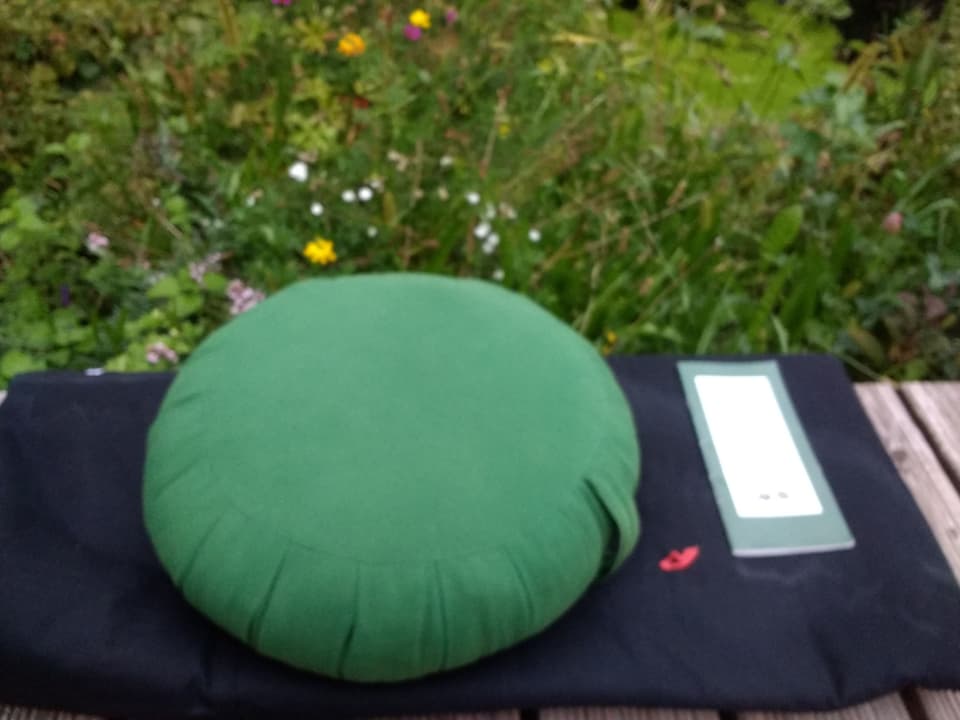
Photo is illustrative, not from a past month. Credits.
Please read this first. Meditation here means calm, quiet time. It is not a health treatment, and it is not a replacement for care from a doctor. If you have lived through trauma, or have any mental-health concerns, please talk to your doctor or a qualified mental-health professional before you start, and stop any practice that makes you feel worse. The Quiet Month is not medical, not therapy and not rehab. In a crisis, call your local emergency number or find a free helpline at findahelpline.com.
Most people who search for meditation styles for beginners have already tried once. They sat down, closed their eyes, thought about lunch, thought about an email, wondered whether they were doing it wrong, and opened their eyes after ninety seconds. That is not failure; that is what the first try looks like for everyone. This guide explains six simple styles in plain words, so you can find one that fits you. Each takes five to fifteen minutes. None needs an app or a cushion.
What meditation is, and what it isn't
The US National Center for Complementary and Integrative Health (NCCIH), part of the National Institutes of Health, describes meditation as a wide range of practices that bring mind and body together and aim to calm the mind. Some styles focus attention on one thing, such as a sensation, a sound or a word. Mindfulness, a form of meditation, is about paying attention to the present moment without judging it.
Meditation is not emptying your head (nobody manages that). In almost every style, the actual exercise is this: you notice your attention has wandered, and you kindly bring it back. Each return is one "rep", like one lift at the gym.
It is also worth knowing what NCCIH says about safety. Meditation is generally thought of as low-risk, but few studies have looked closely at possible harms. A 2020 review it cites found that about 8 percent of people in the studies reported an unpleasant or negative experience. NCCIH also says meditation should not be used to replace conventional care, or as a reason to put off seeing a doctor about a health problem. That is the spirit of this whole article: a calm habit, not a medical tool.
How to start: five minutes, most days
Harvard Health Publishing's 2026 guide to meditation techniques gives beginners sensible advice: start with about five minutes a day, most days of the week, and build slowly towards 10 to 20 minutes. Pick a regular time and a quiet spot. Sit in a chair with your back supported and your feet flat on the floor, or on a cushion if you prefer. The same guide says consistency matters more than length, and that early changes are usually subtle.
Three small things make the first week easier:
- Set a gentle timer. Then you can stop checking the clock.
- Attach it to something you already do, like the first coffee, or straight after a morning walk.
- Expect your mind to wander. Harvard's guide calls wandering normal, and suggests seeing each return as practice, with kindness rather than self-criticism.
Meditation styles for beginners: the six to try
From the most structured to the most open. Try each for a few days before you decide.
1. Breath counting
How: sit comfortably and breathe normally. Silently count each out-breath, from one up to ten. Then start again at one. If you lose count, or find yourself at "fourteen", simply go back to one. No breathing tricks, no holding: just count.
Why it helps beginners: it gives a busy mind a small job, and it makes wandering obvious, because the count stops. Researchers at the University of Wisconsin–Madison, led by Daniel Levinson with Richard Davidson, used breath counting as a way to measure mindfulness in a 2014 paper in Frontiers in Psychology. In one of their studies, people who did four weeks of online breath-counting practice did better on mindfulness measures, and reported less mind wandering, than comparison groups. One study is not a promise, but it shows something this simple is taken seriously.
Suits: people who like a clear task, and anyone who says "I can't meditate, my mind is too busy".
2. Body scan
How: sit or lie down. Bring your attention slowly through the body, usually from the feet upwards: feet, legs, back, belly, hands, arms, shoulders, neck, jaw and face. At each place, just notice what is there: warmth, pressure, tingling, nothing at all. Where you notice tension, let it soften if it will. The Greater Good Science Center at UC Berkeley suggests a short version of about five minutes, and adds a kind note: if you can't feel sensations in some areas, that is fine.
Why it helps beginners: the route is fixed, so you always know what's next. Harvard's guide suggests a 10 to 15 minute body scan as part of winding down, even in bed before sleep.
Suits: people who carry tension in the shoulders and jaw, and people who want a calmer bedtime. A gentle caution: some people find close attention to the body uncomfortable. If that's you, keep your eyes open, keep it short, or choose walking meditation instead.
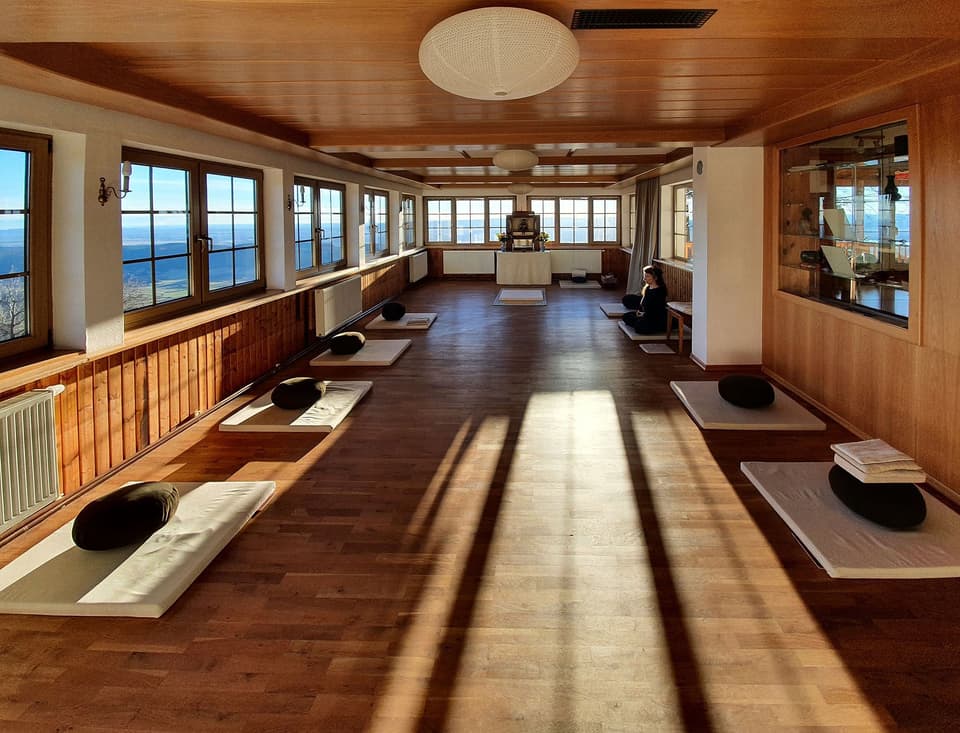
3. Walking meditation
How: find a quiet path, indoors or out, about 10 to 15 paces long. Walk slowly to one end, pause, turn and walk back. Pay attention to each step: the foot lifting, moving, landing, and the weight shifting. When your mind drifts, come back to the feet. Greater Good suggests about ten minutes a day. If you use a wheelchair, its version suggests attending to your hands on the rims and the movement of the chair.
Why it helps beginners: sitting still is the hardest part for many people. In an August 2026 Harvard Health article, psychologist Ronald Siegel says that for many people, the easiest way to start a mindfulness practice is with walking meditation. Slow walking in a calm place, focusing on the feel of the feet on the ground.
Suits: restless people, and people who fall asleep when they sit. It is also in our free quiet week at home plan.
4. Loving-kindness
How: sit quietly, settle with a few breaths, then silently repeat a few warm wishes. Greater Good's version uses words like: May I be safe, may I be healthy, may I be happy, may I live with ease.
First for yourself, then for someone you love, then for someone neutral, like a shop assistant you see often, and slowly for a wider circle. Its guide suggests about 15 minutes, which beginners can shorten.
Why it helps beginners: it gives the mind words to hold. Greater Good is honest that it can feel artificial at first, and that not feeling much is fine.
Suits: people who are hard on themselves. If the "for yourself" part feels too hard, start with someone you love.
5. Mantra (a repeated word)
How: choose a short, calm word or phrase. Silently repeat it, slowly, perhaps once on each out-breath. When thoughts arrive, let them pass and return to the word. That's all.
Why it helps beginners: this is close to what the Harvard cardiologist Herbert Benson called the relaxation response. As Harvard Health has described it: sit comfortably and focus on a single word or phrase of your choice, such as "one" or "peace", for about ten minutes. The word does not need to be religious. "One" works.
Suits: people who like rhythm, people who pray, and people who find the breath alone too subtle to hold on to.
6. Open awareness
How: sit, settle with a few breaths, then stop choosing one thing to focus on. Simply notice whatever arrives: a sound outside, the feeling of your hands, a thought about later, a car, a bird. Let each one come and go without following it. If you get lost in a thought, come back to listening for sounds for a few breaths, then open up again.
Why it is last: a well-known 2008 review in Trends in Cognitive Sciences by Antoine Lutz, Richard Davidson and colleagues described two families: "focused attention" styles, where you hold attention on one chosen object, and "open monitoring" styles, where you watch experience unfold without reacting. Styles 1 to 5 are mostly the focused kind. Open awareness is the open kind, and it is often suggested after some focused practice, because without an anchor it easily slides into daydreaming.
Suits: people who have tried the others and want something more spacious.
The six styles at a glance
| Style | What you focus on | Good first length | Often suits |
|---|---|---|---|
| Breath counting | Out-breaths, counted 1 to 10 | 5 minutes | Busy minds |
| Body scan | Each part of the body in turn | 5 to 10 minutes | Tense shoulders, bedtime |
| Walking | Feet, steps, the ground | 10 minutes | Restless people |
| Loving-kindness | Kind wishes for yourself and others | 5 to 10 minutes | People hard on themselves |
| Mantra | One calm, repeated word | 5 to 10 minutes | People who like rhythm |
| Open awareness | Whatever arrives, without holding on | 5 minutes | After some practice |
Common beginner worries
"My mind won't stop." Nobody's does. A session with fifty wanderings and fifty returns is a busy, useful session.
"I can't sit cross-legged." You don't need to. A chair with your feet flat is exactly what Harvard's guide suggests. Lying down works too, though you may fall asleep.
"Do I need an app?" No. A timer is enough. If you would like a voice to follow, UCLA's Mindful Awareness Research Center offers short guided recordings to stream or download, including a five-minute breathing meditation, a three-minute body scan and a loving-kindness meditation of about nine minutes.
When to stop, and when to talk to someone
Most people find short sessions pleasant, or at worst boring. If a practice brings up strong memories, a sense of panic, or leaves you feeling worse rather than calmer, stop. Open your eyes, look around the room, stand up, walk, have a glass of water. Harvard's guide says that if meditation seems to increase distress, you should pause and talk with your health provider. NCCIH also suggests telling your health care providers about any practices like this that you use.
This matters most for anyone who has lived through trauma or has mental-health concerns. Some people find long silent sessions, or close attention to the body, difficult. A doctor or a qualified professional can help you decide whether meditation suits you right now. A retreat, a book or an app should never be the first stop for someone who is struggling.

A four-week plan to try them all
Count and walk
Breath counting, five minutes, most mornings. On the other days, a ten-minute walking meditation.
Scan
A short body scan in the morning, or a longer one in bed. Notice which time suits you.
Words
Loving-kindness on some days, a mantra on others. Keep the one that feels less forced.
Choose
Pick your favourite and stretch it to ten minutes. Try open awareness once or twice, just to see.
Write one line after each session: style, minutes, one word for how it felt. After a month you will have your own honest answer.
How meditation fits into The Quiet Month
In The Quiet Month we meditate together each early morning for 10 to 20 minutes, trying different simple styles like these through the month. It is always optional. There are no long silent sessions and no breathing extremes. If a style doesn't suit you, skip it and have your coffee. Then the day carries on: shared low-carb, keto-style meals, daily exercise, outings and long evening talks. Up to four guests, each in their own private flat. The one rule: no smoking, no alcohol, no drugs for the month.
About me, honestly: a few years ago I stopped drinking and smoking and started eating well, exercising every day and meditating. I am self-taught in nutrition. I am not a doctor, a counsellor or a mental-health professional, and the sessions are simple, plain-language practice, nothing more. A typical day is on the month page, and common questions, including "do I have to meditate?", are in the questions.
If you like the idea of quiet mornings but your evenings are the hard part, read sleep without alcohol: what changes in the first month. If you are mainly tired from work, why a quiet month beats a long weekend may be the better read. And if you want to try the whole rhythm at home first, the free 7-day quiet week at home includes a few minutes of beginner meditation every day.
Questions people ask
Which meditation style is best for beginners?
There is no single best one. Breath counting and walking meditation are often the easiest starts, because they give your attention a clear job. Try two or three styles for a few days each, and keep the one you will actually do.
How long should a beginner meditate?
Harvard Health suggests starting with about five minutes a day, most days of the week, and slowly building to 10 to 20 minutes. Doing it regularly matters more than doing it for long.
Is meditation safe for everyone?
It is generally thought of as low-risk, but some people have unpleasant experiences. If you have lived through trauma or have mental-health concerns, talk to a doctor or a qualified professional first, and stop any practice that makes you feel worse.
Do I have to meditate in The Quiet Month?
No. Meditation is always optional. Sessions are 10 to 20 minutes in the early morning, with simple styles and no breathing extremes. The Quiet Month is not medical, not therapy and not rehab.
Sources
- NCCIH (US National Institutes of Health): Meditation and mindfulness, what you need to know (definition; safety; about 8% reported a negative experience in a 2020 review)
- Harvard Health Publishing: Meditation techniques, how to meditate for stress, sleep and focus (Aug 2026) (start with about 5 minutes; body scan; pause if distress increases)
- Harvard Health Publishing: Mindfulness practices to reduce stress and improve focus (Aug 2026) (Ronald Siegel on walking meditation)
- Harvard Health Publishing: Using the relaxation response to reduce stress (2010) (Herbert Benson; a single word such as "one" or "peace")
- Greater Good in Action (UC Berkeley): Body scan meditation
- Greater Good in Action (UC Berkeley): Walking meditation
- Greater Good in Action (UC Berkeley): Loving-kindness meditation
- Levinson et al. (2014), Frontiers in Psychology: A mind you can count on, validating breath counting as a behavioral measure of mindfulness (includes a four-week online breath-counting study)
- Lutz, Slagter, Dunne and Davidson (2008), Trends in Cognitive Sciences: Attention regulation and monitoring in meditation (focused attention and open monitoring)
- UCLA Mindful Awareness Research Center: Guided meditations (short recordings to stream or download)
- Find A Helpline: free helplines in many countries
Prices and facts were checked on 23 October 2026. Prices change; always check the source before you book anything.
Want to try the rhythm at home first? Read the free 7-day plan: a quiet week at home. Walks, simple low-carb meals, short meditations and a printable checklist. No sign-up.