Community · Friendship
How to find sober friends as an adult (without it feeling like a job interview)
At school, friends happened to you. At work, they happened near the kettle. After that, for a lot of us, they happened at the bar. Take the bar away and you can feel like the last person at a party that ended years ago. Here is how to build a social life that doesn't run on drinks, with real numbers, real places and things you can actually say.

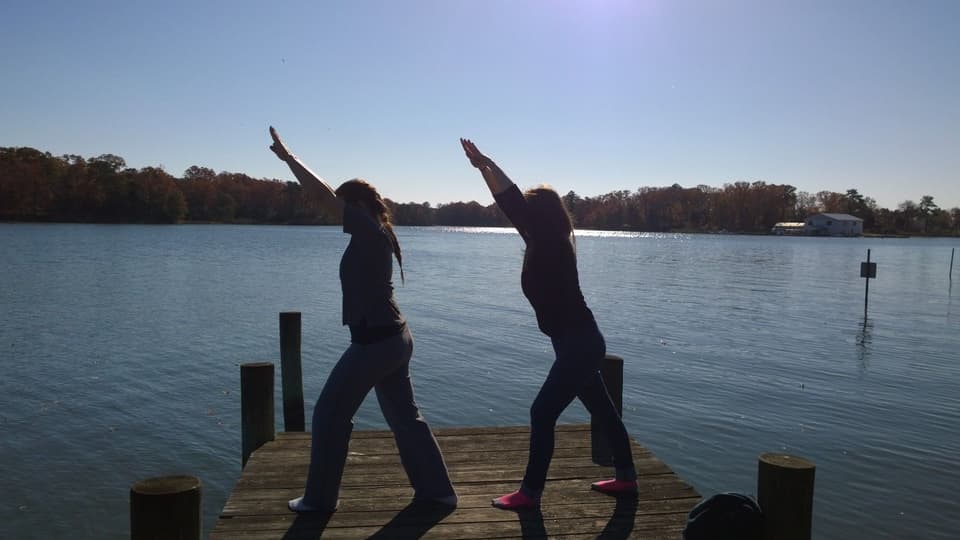
Photo is illustrative, not from a past month. Credits.
Here is a sentence nobody prepares you for: "So what do you do for fun, if you don't drink?" It is usually asked kindly, by someone holding a glass of wine, and it lands like a pop quiz you didn't revise for. The honest answer, for many people in their first sober months, is "I'm working on it."
This guide is for working on it. It is about how to find sober friends as an adult: people you can see without a drink being the point. Not a new personality, not a new tribe with a uniform. Just a handful of people who are glad to see you at 8am on a Saturday, or at a quiet dinner on a Friday, and don't ask you to explain your glass.
Please read this first. If you drink heavily or every day, or use other drugs daily, stopping suddenly can be dangerous. Talk to a doctor before you stop. The Quiet Month is not medical, not therapy and not rehab. In a crisis, call your local emergency number or find a free helpline at findahelpline.com. More in our questions.
You are less alone than it feels
Two numbers worth knowing before you start. First, in Gallup's 2025 survey, only 54% of US adults said they drink alcohol at all, the lowest share in Gallup's records going back to the 1930s. Put the other way round, nearly half of adults don't drink. Many of them are perfectly sociable. They are just not at the bar, which is why you haven't met them.
Second, adult friendship is thin for almost everyone right now, drinkers included. The Survey Center on American Life found in 2021 that 12% of Americans said they had no close friends, up from 3% in 1990. In 2025 the World Health Organization's Commission on Social Connection reported that about 1 in 6 people worldwide is affected by loneliness. So if your social life feels quieter since you stopped drinking, some of that is the drinking, and some of it is simply being a grown-up in the 2020s. Neither is a personal failing.
Rowan is our AI assistant. Please keep health details for the video call.
Why it's harder after 30 (it isn't you)
School and university did three things for friendship that adult life stops doing. They put you near the same people, again and again, without anyone having to plan it. They gave you a shared thing to do. And they gave you hours. Lots of hours.
The hours matter more than anyone tells you. Jeffrey Hall at the University of Kansas studied how long it takes to make a friend. His 2018 work estimated that it takes roughly 50 hours together to go from acquaintance to casual friend, about 90 hours to become a real friend, and more than 200 hours for a close friend. He also found that the hours need to be social time: working side by side counts for much less than talking, joking and doing things together.
Now do the maths on a normal adult week. Two hours a week with someone new gets you to "casual friend" in about six months. That is not a reason to give up. It is a reason to choose things that repeat, because a weekly something does the hard part, the showing up, for you.
And here is where drinking used to cheat. A night at the pub quickly piles up hours, and alcohol makes small talk feel easier. Without it, you need a better reason to be in the same room more than once. Good news: there are dozens.
First, what counts as a "sober friend"?
Not just people who never drink. That is a smaller pool than you need, and it can turn friendship into a club with a membership test. A more useful definition: a sober friend is someone with whom the plan isn't drinking. They might drink at a wedding. They just don't need it to have a good time with you. In practice you are looking for three kinds of people:
- Fellow non-drinkers. People who have stopped, are taking a month off, or never started. You'll find them in the places below, and they are often very glad to be found.
- Morning people and doers. Runners, swimmers, climbers, walkers, choir singers. They may drink, but their social life with you happens at 7am or around a shared activity, so it rarely comes up.
- Flexible old friends. The friends who will happily swap the bar for breakfast once you ask. More of them exist than you think. More on them below.
Where to find sober friends: 12 places that actually work
The best places share three things: they repeat (weekly is ideal), drinking isn't built in, and there is something to do, so nobody has to carry the conversation alone. The Survey Center on American Life found that people met their close friends mostly at work (54%), at school (47%), through friends they already had (40%) and in their neighbourhood (35%); clubs and organisations came to 19%, and online only 8%. So the plan is: show up somewhere regular, near where you live, and let friends of friends happen.
- A running or walking group. Free or cheap, weekly, and conversation happens side by side, which is easier than face to face. Many cities have free weekly timed 5k runs on Saturday mornings (parkrun is the best known), and the coffee afterwards is where the friendships start.
- A climbing or bouldering gym. People wait their turn, chat about the wall and help each other. Regulars at the same hour learn your name fast.
- A swimming group or sea-swim club. Nobody has ever been offered a pint at 7am in a wetsuit. A cold-water dip has a way of making strangers into a team.
- A choir. Weekly, a shared goal, a concert to work towards, and you don't need to be good, just willing. Singing together gives people something to talk about immediately.
- A class with a term. Pottery, cooking, a language, life drawing. A ten-week course means ten meetings with the same faces: very close to Hall's hours, and you leave with a bowl.
- Volunteering. A weekly shift at a food bank, a park clean-up, a charity shop. You do something useful with people who care about the same thing.
- Sober and sober-curious meetups. Search event sites such as Meetup or Eventbrite for "alcohol-free", "sober curious" or "sober social". You'll find coffee mornings, hikes, board-game nights and alcohol-free bar nights. Quality varies, so go twice before you judge.
- A book club or film club. Pick one that meets in a café or a library, not a wine bar. If you can't find one, start one: three people and a date is enough.
- A sports team. Five-a-side, netball, walking football, a social tennis ladder. The team needs you there every week, which is exactly the point.
- Your neighbourhood. Be a regular at the same café at the same hour. Say yes to the street party and the community garden. Neighbourhood came third in that survey for a reason.
- Faith or community groups, if that is your world. Many run weekly groups, meals and outings with no bar in sight.
- Online, then local. Online groups are good for finding your people and rarely enough on their own. Use them to find something to go to.
| Place | Repeats weekly? | Drinking built in? | Cost | Best for |
|---|---|---|---|---|
| Running or walking group | Yes | No | Free to low | Shy people (side-by-side talk) |
| Climbing gym | If you go at the same time | No | Middle | Making friends fast |
| Choir | Yes | Sometimes a pub after | Low | Feeling part of something |
| Ten-week class | Yes | No | Middle | A fixed number of meetings |
| Volunteering | Yes | No | Free | Shared values |
| Sober meetups | Often | No, by design | Free to low | Meeting other non-drinkers |
| Old friends, new plans | If you set it up | Up to you | Varies | Keeping the friends you have |
A tip on choirs and teams: some end the evening at the pub. You can go for the first half hour with a soft drink and leave while everyone still likes everyone, or suggest a café instead now and then. You won't be the only one who is relieved.
How to turn a familiar face into a friend
Finding the place is the easy part. The hard part is the step most adults never take: going from "we nod at each other on Thursdays" to "we do things on purpose". Here is a simple way to do it.
- Show up three times before you judge. Week one, everyone is a stranger. Week three, you are "the one who always brings the good flapjacks". Familiarity does a lot of quiet work.
- Learn one thing and remember it. Their dog's name, the race they are training for, the exam their daughter is sitting. Ask about it next week. It is the simplest way to show someone they matter.
- Make one small, specific invitation. Not "we should hang out some time" (a phrase that has never once led to anyone hanging out). Try: "A few of us are getting breakfast after the run on Saturday, want to come?" or "I'm going to the late opening at the museum on Thursday, fancy it?"
- Do the second invitation. This is the one people skip. The first invitation is friendly; the second one is a friendship. If they said no the first time with a reason, ask once more.
- Build a ritual. "First Sunday of the month, the long walk." Rituals save everyone the work of planning, and they quietly add up those 200 hours.
Some messages you can copy, word for word:
- "Good to see you at choir. A couple of us are going for a coffee before next week's rehearsal, 6.15 at the café on the corner, if you'd like to come."
- "I'm trying to do more mornings and fewer late nights this month. Fancy a walk and breakfast on Saturday?"
- "I've got two tickets for the comedy show on Friday, early show, back by ten. Interested?"
Will some people say no? Yes. A no to Saturday breakfast is not a no to you. Adults are busy, tired and out of practice, just like you. Keep the offer light and keep making it.
What to say when the drinking question comes up
It will come up. You do not owe anyone a speech, a medical history or a confession. A short line said lightly is enough, and the conversation will move on faster than you expect.
- "I don't drink. I'm more of a coffee person." (Then ask them something.)
- "Not tonight. I've got an early start and I'm enjoying the mornings."
- "I'm taking a break. Best decision I've made this year, honestly."
- "I'm good with this, thanks." (Lift your glass. Smile. Done.)
The US National Institute on Alcohol Abuse and Alcoholism's Rethinking Drinking guide suggests having a polite, convincing "no, thanks" ready, because hesitating makes it easier to give in. I've written a whole guide of lines and plans for this: how to not drink when your friends do. And if the problem is what to hold in your hand, see what to drink instead of alcohol.
Keeping your old friends who still drink
You don't need to replace your friends. Most friendships survive a change in drinking perfectly well; they just need a few new formats. Ideas that work:
- Move the time, not the friend. Breakfast, lunch, an afternoon walk. Most "let's get a drink" plans are really "let's catch up", and catching up works at any hour.
- Come for the first two hours. The best part of any evening out is the start. Arrive on time, be good company, leave before it gets loud and repetitive.
- Host. Dinner at yours means you choose the drinks, the music and the end time. Make one great alcohol-free drink and keep a bottle of something for guests if you're comfortable with that.
- Suggest the activity. Bowling, a gig, a cooking class, a match. Doing something gives the evening a shape that doesn't depend on refills.
- Tell one close friend what you are doing. A friend who knows can help you out at the table. A friend who doesn't will keep offering.
A small honest warning: one or two friendships may turn out to have been mostly about the drinking. That can sting. It is also useful information, and it leaves room for the people who will be glad to see you at 8am.
If you're shy, or simply out of practice
Social confidence is a skill that fades with lack of use and comes back with practice, like a language. A few gentle ways to warm it up:
- Talk to one stranger a day. The barista, the person next to you in the queue, a neighbour. Research by Nicholas Epley and Juliana Schroeder found that commuters asked to talk to a stranger expected it to be unpleasant, and then reported a more pleasant journey than those who sat in silence.
- Prepare two questions. "What's keeping you busy at the moment?" and "What are you looking forward to?" Both are better than "What do you do?"
- Choose side-by-side over face-to-face. Walking, cooking, climbing. Activities take the pressure off eye contact and silence.
- Plan your exit. Knowing you can leave at nine makes it much easier to go at seven.
If you'd like to think it through first, Rowan, our AI assistant, can help you plan which group to try, what to say in that first message, or how to suggest a breakfast instead of a bar. To be clear: Rowan is an AI, not a friend, and he'll say so. His whole job here is to help you get out of the door and towards people.
Rowan is our AI assistant. Please keep health details for the video call.
A 30-day plan to build a sober social life
Thirty days won't give you 200 hours with anyone. It can give you three new places, a handful of familiar faces and a couple of rituals, which is how every friendship starts.
- Week 1, look: list five things nearby that repeat weekly and don't revolve around drinking. Pick two and go to each once. Tell one old friend you're doing more mornings this month and suggest a breakfast.
- Week 2, return: go back to both. Learn one name and one thing about that person at each. Talk to one stranger a day.
- Week 3, invite: make one small, specific invitation. Host one simple dinner or a games night, with a good alcohol-free drink on the table.
- Week 4, repeat: make the second invitation. Set one monthly ritual with someone. Drop the group you didn't enjoy, without guilt, and try a new one.
Doing this in January? 30 Quiet Days is our free programme from 1 to 31 January 2027: one short email each morning with one small thing to try, many of them about people and evenings, plus an optional daily check-in with Rowan. You don't have to be sober to join.
Circles: small groups that open in waves
We are building something for exactly this, carefully. Our Circles are small groups of 6 to 50 real people, each with a host and one good question a day. You read, you answer if you like, and the page ends with "You're up to date", so it doesn't eat your evening. The first three are Quiet Evenings (for people taking their evenings back), The Turning Point (for people changing something big) and Morning People. Each opens at 15 members, and the first seats go to the Founding 100 waitlist.
Honestly: we are new, so there are no members to show you yet, and we won't invent any. Counts are hidden, there are no likes to chase, and there are no private messages from strangers. It is not a replacement for people near you; it's a place to find a few kindred spirits and a nudge to go out and see them.
When it is more than missing company
Feeling a bit lonely while your social life changes shape is normal. Feeling very low for weeks, or unsafe, is different. Please talk to a doctor or someone you trust. In a crisis, call your local emergency number or find a free helpline in your country at findahelpline.com. And if stopping drinking itself is the hard part, a doctor is the right first conversation, not a running club.
A month of good company: The Quiet Month
If you'd like to skip straight to the long table, this is what I do. The Quiet Month is one calm month for up to four guests. Each guest has their own private flat about ten minutes' walk from me. We share simple low-carb meals, move every day, sit for a short meditation (always optional), go on outings and talk for hours over coffee. One free day a week. The rule is no alcohol, no smoking and no drugs for the month; prescribed medicine is always fine. A month is a good many of Hall's hours with the same people. Guests usually leave with a new routine, and quite possibly a friend or two.
The first month starts on 1 January 2027, then on the 1st of every month. The fee is US$10,000 for the month; your flat and flights are extra, and nothing is paid before a free video call and a signed agreement. I'm self-taught, not a doctor or counsellor, and The Quiet Month is not medical, not therapy and not rehab. I don't publish where I am; you learn the country and city after the call, before you sign anything. See how the month works and what's included.
Questions people ask
How do I find sober friends as an adult?
Go somewhere that repeats every week and isn't built around drinking (a running or walking group, a class, a choir, volunteering, a sober meetup), go at least three times, learn names, then make one small, specific invitation, such as breakfast after the run. Research by Jeffrey Hall suggests it takes about 50 hours together to become casual friends, so regular things matter more than big nights.
Where do people who don't drink socialise?
Mornings and activities: runs, walks, swims, climbing gyms, classes, choirs, book clubs, games nights, cafés, late openings at museums, and alcohol-free bar nights. Event sites such as Meetup or Eventbrite list many "alcohol-free" and "sober curious" events. Nearly half of US adults don't drink (Gallup, 2025), so you're far from the only one.
Can I stay friends with people who drink?
Usually, yes. Change the format rather than the friend: breakfast instead of the bar, the first two hours of a night out, hosting at yours, or an activity. Tell one close friend what you're doing so they can back you up.
How long does it take to make a new friend?
In Jeffrey Hall's research at the University of Kansas, roughly 50 hours together to become a casual friend, about 90 hours to become a friend, and more than 200 hours to become a close friend, mostly in social time rather than working side by side.
What are Circles on The Quiet Month?
Small online groups of 6 to 50 real people, each with a host and one good question a day. They open in waves, starting with the Founding 100 waitlist, and each circle opens at 15 members. Counts are hidden, no selling, no private messages from strangers, 18 and over.
Sources
- Gallup (August 2025): U.S. drinking rate at new low as alcohol concerns surge (54% of US adults say they drink; telephone survey of 1,002 adults, July 2025)
- Survey Center on American Life (June 2021): The State of American Friendship (12% no close friends, up from 3% in 1990; where people met close friends)
- University of Kansas (March 2018): Study reveals number of hours it takes to make a friend (Jeffrey Hall, Journal of Social and Personal Relationships: about 50, 90 and 200+ hours)
- World Health Organization (30 June 2025): Social connection linked to improved health and reduced risk of early death (about 1 in 6 people affected by loneliness)
- U.S. Surgeon General (2023): advisory on loneliness, isolation and social connection
- Epley N and Schroeder J (2014), Journal of Experimental Psychology: General: Mistakenly seeking solitude (commuters who talked to a stranger reported a more pleasant journey)
- NIAAA, Rethinking Drinking: Tips to try ("Know your no"; new activities)
- Find A Helpline: free helplines in many countries
Prices and facts were checked on 24 October 2026. Prices change; always check the source before you book anything.