Guide · Sober curious
Sober curious retreat: what it is, who it suits, and who it doesn't
No labels, no confessions, no lectures. Just a plain look at the sober curious idea, what a retreat built around it is like, and how to tell if one would suit you.

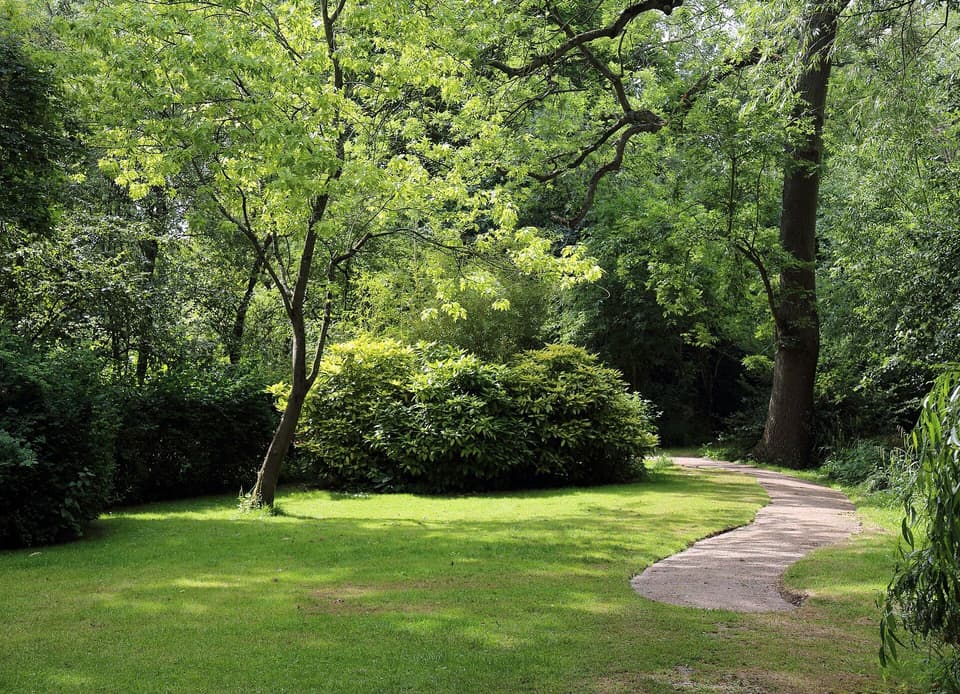
Photo is illustrative, not from a past month. Credits.
Please read this first. If you drink heavily or every day, or use other drugs daily, stopping suddenly can be dangerous. Talk to a doctor before you stop. The Quiet Month is not medical, not therapy and not rehab. In a crisis, call your local emergency number or find a free helpline at findahelpline.com. More in our questions.
A sober curious retreat is a stay where nobody drinks, built for people who are not sure what alcohol is doing for them and would like to find out. You don't have to call yourself sober. You don't have to have a problem, a story or a rock bottom. You only need to be curious, and able to stop safely. This guide explains where the sober curious idea came from, what a retreat built around it is actually like, who it suits, who it doesn't, and what to ask before you pay anyone anything.
What "sober curious" means
The phrase was made popular by the writer Ruby Warrington, whose book Sober Curious was published by HarperOne. Her idea is simple: instead of drinking on autopilot, you get curious about each invitation, habit and expectation to drink, and ask whether you actually want it.
That is a different starting point from the one most people picture when they hear the word "sober". Being sober curious is not a promise to never drink again. It is not joining a group, taking a pledge or admitting anything. For some people it ends in a decision to stop for good. For others it ends in drinking a lot less, or only on occasions they really enjoy. For many it is simply a month of noticing.
The best way I can put it: being sober curious is asking a question. A sober curious retreat is a calm place to hear your own answer.
Why so many people are asking the question
You are in large company. Every summer, Gallup asks Americans whether they ever drink alcohol. In its 2025 survey, published in August, 54% said they drink, the lowest figure in Gallup's nearly 90 years of asking. It was 62% in 2023 and 58% in 2024. Among adults under 35, the figure fell from 59% in 2023 to 50%.
The same survey found that 53% of Americans now believe moderate drinking is bad for your health, the first time a majority has said so. That shift has a likely source. In January 2023, the World Health Organization's European office published a statement with a blunt headline: No level of alcohol consumption is safe for our health
. It notes that alcohol causes at least seven types of cancer.
I won't pretend these numbers prove anything about you. They are surveys and statements about whole populations. But they do show that "should I drink less?" is no longer an odd question to ask. Plenty of people are asking it at the same time.
What a sober curious retreat is like
Retreats differ a lot, but the honest ones share a few things.
- No alcohol, by rule. Not "mostly". The whole point is that nobody has to decide each evening, because the decision is already made.
- A daily rhythm. Usually food, movement, some quiet time and something to do in the afternoons, so the day has a shape that isn't built around a drink.
- Company that has made the same choice. Nobody raises an eyebrow at your sparkling water. That alone is a surprising relief for many people.
- No pressure to perform. You don't have to share your drinking history, and a good host never asks you to in front of others.
Most sober retreats last a weekend or a week. A few last a month. In October 2026, the sober retreat section of BookRetreats listed a 30-day sober reset in the mountains near Valencia from US$4,035, and a 28-day sober retreat on a remote Indonesian island at US$22,000, alongside many shorter stays. I compared these and other prices in what a one month wellness retreat costs.
A good sober retreat is also clear about what it is not. The UK booking agency healingholidays.com, in its August 2026 guide to sober retreats, says these retreats are not alcohol rehabilitation centres and should not be regarded as alternatives to addiction treatment
. That is the right line, and it is ours too.
Who a sober curious retreat suits
In my experience, the people who get the most from a sober curious stay tend to have a few things in common.
- You can stop safely, and you know it, because you have gone days or weeks without a drink before and felt fine.
- Your drinking is a habit you'd like to look at, not something that frightens you. The glass of wine that comes with cooking. The Friday that starts at 5pm. The "just one" that is never one.
- You want your mornings back. Clear heads, early walks, Saturdays that start before lunch.
- You are at a turning point, in work or life, and want a few weeks without the usual noise to think about what comes next.
- You'd find it easier with company than on your own sofa, surrounded by the usual cupboard and the usual friends.
None of these needs a label. "I wondered what it would be like" is a perfectly good reason.
Who should not book one, or should see a doctor first
This is the most important part of the article, so I'll be plain.
If you drink heavily or every day, stopping suddenly can be dangerous. MedlinePlus, from the US National Library of Medicine, explains that alcohol withdrawal can range from mild to serious and even life-threatening, and that the more someone drinks, the more likely they are to have symptoms when they stop. Alcohol Change UK warns that people who are dependent on alcohol can die if they stop suddenly and completely, and advises getting help from a GP or local alcohol service to cut down safely.
So a sober curious retreat is not the right first step if:
- you drink heavily, or every day;
- you have had shakes, sweats, seizures or seen things that weren't there when you stopped before;
- you have tried to stop and found you couldn't;
- you need professional help with alcohol or other drugs.
If any of that sounds like you, or you are not sure, please talk to a doctor before you book anything. A retreat is a lovely thing. It is not medical care, and the honest ones won't pretend to be. If you want to understand the different kinds of help, I wrote a plain guide: sober month retreat, sober living or a rehab centre.
There is also a gentler self-check. The US government's Rethinking Drinking site, from the National Institute on Alcohol Abuse and Alcoholism, has plain information on what counts as a drink, how much is too much, and signs that it may be time to get help. It is a useful ten minutes before any retreat, including mine.
A weekend, a week or a month?
Most sober curious retreats are short, and a short one can be a perfectly good taste. But it is worth thinking about what you want to find out.
A weekend tells you that you can have a nice time without a drink. That is useful, and for some people it is enough.
A week gets you past the first few evenings, which are often the strangest. You start to see what an ordinary day feels like without the usual punctuation.
A month gives a routine time to stop feeling new. Research on habits suggests a new daily habit takes a while to feel automatic: in a University College London study led by Phillippa Lally, it took an average of about 66 days for a daily behaviour to reach its peak of automaticity, with very wide differences between people, from 18 days to a predicted 254. The same study found that missing a single day made little difference. So a month won't build a habit for you. But thirty mornings are a lot more practice than three, and many people find the questions they came with have clearer answers by week three.
That is a practical view, not a promise. Some people learn all they need in a weekend. Some need longer than a month. Both are fine.
What you might notice (and what nobody can promise)
People who take a break from alcohol often report the same short list. In a University of Sussex survey of around 800 people who did Dry January in 2018, 88% said they saved money and 71% said they slept better. Those are self-reported answers from people who chose to take part, not a promise for anyone. Still, money and sleep come up again and again.
The other things people mention are harder to measure: Saturday mornings that start early, evenings that feel longer, conversations they remember. And some people notice things they didn't expect, like how often a drink was offered to them, or how much of their social life was built around one.
What nobody can honestly promise is how you will feel on day 30. If a retreat tells you it will change your life in a week, please be polite and walk away.
What to check before you book a sober curious retreat
Whichever retreat you look at, ours or anyone else's, these questions are worth asking.
- Is the alcohol rule absolute? "Alcohol-free" and "we have a lovely wine list but you don't have to order" are different holidays.
- Do they ask about your health? A place that asks nothing about your drinking or your doctor is not relaxed. It is careless.
- Who runs it, by real name? I use a professional name, Sami Adham, and say so openly. You get my full legal name in writing before you sign or pay.
- How many guests? Six, sixteen or sixty changes everything about the evenings.
- Can you leave whenever you like? You should always keep your own phone, passport, money and key.
- What are the refund terms, in writing, before you pay?
- Do they make health promises? If so, keep looking.
How The Quiet Month works as a sober curious retreat
The Quiet Month is a sober curious retreat stretched to a month, with a routine already built. Up to four guests each live in their own private flat, about ten minutes' walk from me, in one calm place. We share low-carb, keto-style meals, exercise every day at a pace that suits each person, meditate for 10 to 20 minutes (always optional), go on outings and talk over coffee in the evenings. There is one free day a week.
The rule is simple: no smoking, no alcohol, no drugs for the whole month. Vapes and nicotine pouches count. Prescribed medicine is always allowed. You don't need to call yourself sober or sober curious. You only need to keep the rule.
And here is what it is not. It is not rehab, not medical and not therapy. There are no doctors or nurses. I am not a doctor, a counsellor or a coach. A few years ago I stopped drinking and smoking myself and changed how I eat, move and rest. I am self-taught in nutrition. That gives me a routine to share, not a qualification to look after anyone's health.
That is why every guest needs:
- A doctor's fit-to-join letter for a low-carb diet, daily exercise and a month without alcohol.
- Travel insurance with medical and evacuation cover.
- To be 21 or over.
I don't publish where I am. After a video call, if we both want to go ahead, I tell you the country and city before you sign anything. The application asks honestly about alcohol, smoking and other drugs, and every question lets you say "prefer to discuss on the call". Health details are never sent by email.
The full rhythm of a day is on the month page, the cost is on the price page, and the house rules are in the code of conduct.
Try it at home first, if you like
You don't need a retreat to be sober curious. Plenty of people start with a month at home, and that is a good, cheap way to find out how you feel. My guide on how to plan a month off alcohol covers choosing your dates, planning the evenings and what to say when someone offers you "just one". If you would rather try it on holiday, read the alcohol-free holiday. And if work is the main reason you need a pause, I wrote about that too: why a quiet month beats a long weekend.
If your month at home goes well and you want the next one somewhere calm, with company, you know where to find me.
Questions people ask
What is a sober curious retreat?
An alcohol-free stay for adults who want to see how life feels without drinking, without needing a label. It is a holiday with a routine, not medical care.
Do I have to stop drinking forever?
No. Being sober curious is about asking the question, not making a lifelong promise. During The Quiet Month the rule is no alcohol, no smoking and no drugs for the month. What you do after is your choice.
Is a sober curious retreat right if I drink every day?
Please talk to a doctor first. Stopping suddenly after heavy or daily drinking can be dangerous. A retreat is not medical, and The Quiet Month is not rehab.
Can I come on my own?
Yes. Most guests come alone. There are never more than four guests, each with their own private flat, and you share only what you want to.
Sources
- Gallup: U.S. Drinking Rate at New Low as Alcohol Concerns Surge (Aug 2025) (54% drink; 53% say moderate drinking is bad for health)
- WHO Europe: No level of alcohol consumption is safe for our health (Jan 2023)
- Wellcome Collection catalogue: Sober Curious by Ruby Warrington (HarperOne)
- BookRetreats: sober retreats (30-day and 28-day listings, Oct 2026)
- healingholidays.com: best sober retreats (Aug 2026)
- MedlinePlus (US National Library of Medicine): Alcohol withdrawal
- Alcohol Change UK: Dry January (safety note for people who are dependent)
- NIAAA: Rethinking Drinking (US)
- BPS Research Digest: How long does it take to form a habit? (Lally et al., UCL) (average 66 days, range 18 to a predicted 254)
- University of Sussex: Dry January research, 2018 (Dr Richard de Visser) (self-reported survey of about 800 people)
- Find A Helpline: free helplines in many countries
Prices and facts were checked on 23 October 2026. Prices change; always check the source before you book anything.
Want to try the rhythm at home first? Read the free 7-day plan: a quiet week at home. Walks, simple low-carb meals, short meditations and a printable checklist. No sign-up.